
Updated: Local Woman Seen On ABC’s Good Morning America
July 17, 2012


Several area women made a brief appearance on Good Morning America Monday morning on the ABC television network.
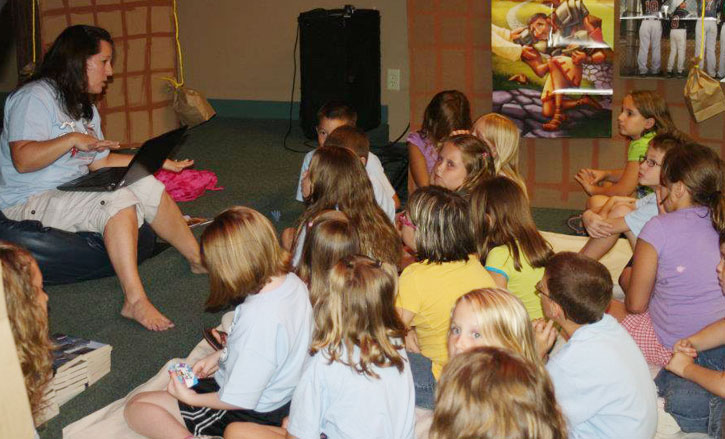
Diane Johnson, three-year old teacher at the Friendship Learning Lodge on Wolf Log Road, was one of the women. She was seen in the New York City crowd, happily waving at the camera. The sign she’s holding had a peace symbol, a heart and “& Roll Tide” (that’s Peace, Love and Roll Tide).
Johnson is in New York with several friends that also received a little airtime — Shirley Manning of Brewton, Barbara Swinney of Gulf Shores, Diane White of Brewton and Sharon Chavers of Brewton.
Pictured top: Shirley Manning, Barbara Swinney, Diane White, Robin Roberts of GMA, Diane Johnson, and Sharon Chavers. Pictured inset: Diane Johnson (right, waving) of Flomaton was seen on ABC’s Good Morning America Monday morning.Courtesy photos for NorthEscambia.com, click to enlarge.

Weekend Photos: Blue Angels
July 16, 2012

This weekend was the annual Blue Angels show at Pensacola Beach, and NorthEscambia.com had dozens of photos — including fly along photos from inside one of the F/18 Hornets.
Click a link for a gallery:
Blue Angels Saturday Show Gallery 1 (Ditto Gorme)
Blue Angels Saturday Show Gallery 2 (Terry Emmons)
Fly Along With The Blues (US Navy)
Blue Angels Friday Practice (Raja Atalla)
Pictured top: The Blue Angels please the crowd Saturday at Pensacola Beach. Pictured below: “Ernie”, a C-130 filling in for the famous Fat Albert, approaches Pensacola Beach. Photos by Ditto Gorme for NorthEscambia.com, click to enlarge.

Big Changes On The Radio
July 15, 2012

It’s time to reprogram the presets on your car radio…there were big changes in the local radio market Sunday with three stations changing their frequencies.
K-LOVE, which recently purchased WABB 97.5, moved and is now heard on 98.3 FM.
WABD 104.1 — airstaff, music format and all — has now moved back home to 97.5 FM.
And, “smooth hits” WDLT 98.3 moved to 104.1 FM.
Wagner, Cook To Wed
July 15, 2012
 Mr. and Mrs. Jonathan Wagner of Bedford, Indiana, announce the engagement of their daughter, Kelsey Ann to Timothy Jordan Cook, son of Mr. and Mrs. Tim Cook of Davisville.
Kelsey is a 2012 graduate of Harding University with a major in speech pathology. Kelsey will pursue her Masters in speech pathology at the University of South Alabama in the fall.
Jordan is a 2010 graduate of Harding University with a Major in kinesiology/athletic training and a 2011 graduate of the University of Louisiana Monroe with a Masters in exercise science. He is currently employed by The Andrew’s Institute in Gulf Breeze.
A July 2012 wedding is planned.
Photo Gallery: Fly Along With The Blue Angels
July 15, 2012

Have you ever wondered what it would be like to fly with the Blue Angels during their air show over Pensacola Beach?
Today, NorthEscambia.com takes you along for a ride during a Blue Angel practice. Fasten your seat belt, hang on, and then…
Click here for the photo gallery.

Pictured: The Blue Angels, as seen from inside on of the planes, fly over Pensacola Beach. Photos by Mass Communication Specialist 2nd Class Andrew Johnson for NorthEscambia.com, click to enlarge.
Birth: Emma Faith Hassebrock
July 15, 2012

John Hassebrock and Sarah Tipton of Cantonment are proud to announce the birth of their daughter, Emma Faith Hassebrock.
Emma was born at Sacred Heart Hospital in Pensacola on June 19, 2012, at 5:58 p.m. She weighed 7 pounds, 2.4 ounces and was 20½ inches long.
Proud grandparents are Pete and Teresa Tipton of Cantonment, and Bennie and Gay Hassebrock of Molino. Big sister and brothers are Hannah and Caleb Hassebrock and Zachary Tipton!
Birth: Gentry Brienne Winingar
July 15, 2012

Kevin and Kelly Winingar of Pensacola are blessed to announce the birth of their daughter Gentry Brienne Winingar.
She was born June 26, 2012, at 2:47 p.m. at Baptist Hospital in Pensacola. She weighed 6 pounds, 15 ounces and measured 20 inches long. Her proud grandparents are Mel and Cindy Rogers of Pensacola, Terri Sanders of McDavid and Donald Winingar of McDavid.
Gentry has two uncles and two aunts; Brian Winingar of Dothan, Steve Rogers of Marietta,GA, Cathie Hightshoe of Kissimmee FL, and Carrie Fisher of Pace.
NHS Grad Wilcoxon Promoted In U.S. Army
July 14, 2012
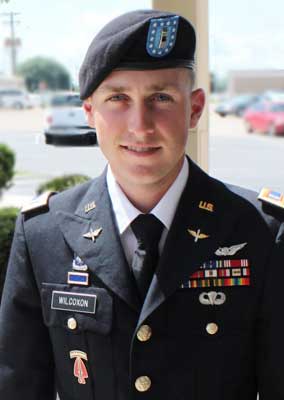 Casey B. Wilcoxon was promoted to the rank of Warrant Officer 1 (WO1) at the US Army Warrant Officer Candidate School, Fort Rucker, AL, in a ceremony on July 12.
Wilcoxon, formerly a sergeant in the 160th Special Operations Aviation Regiment (SOAR) at Fort Campbell, KY, has been in the Army for six years. He will move on to the US Army’s Warrant Officer Flight Training program, also at Fort Rucker, to receive instruction as a helicopter pilot.
He is a 2006 graduate of Northview High School. Wilcoxon and his wife, Kelley (also a 2006 Northview graduate) and daughter, Kali Grace, will reside at Fort Rucker until his training is completed.
Wilcoxon is the son of the late William Bradford Wilcoxon and Pamela Pritchett and step-son of Erbie Pritchett. His grandparents are James and Mildred Lambeth of Flomaton and the late John Wilcoxon and Grace Wilcoxon of Century.
Weekend Gardening: Spots On Your Crape Myrtle May Mean Disease
July 14, 2012
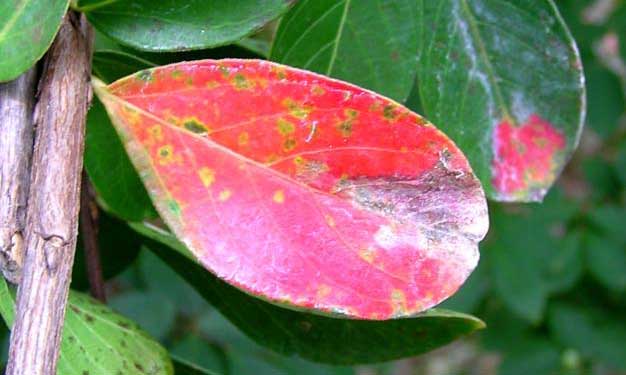
As the heat and humidity increase in Northwest Florida, expect to see some diseases appear in the landscape. One problem that is popping up on crape myrtles is Cercospora leaf spot. While not a deadly problem, it can greatly detract from the beauty of crape myrtles.
 The initial symptom on crape myrtles is the appearance of tan to dark brown spots randomly scattered on yellow to red discolored leaves. The spots develop first on the lower leaves and progress upward in the canopy. Spots will continue to develop from mid-summer through fall. The color change is due to the production of a toxin by the fungal pathogen.
Infected leaves will drop prematurely and serve as a source to spread the pathogen causing further disease development. As the summer progresses, many infected trees will have dropped all but the newest leaves.
Older varieties of crape myrtles are more susceptible to this disease than newer varieties. The crape myrtle varieties most tolerant to Cercospora leaf spot are Natchez, Muskogee, Basham’s Party Pink, Sioux and Tonto.
Long term, this disease is not detrimental to a tree, although it will slow down growth on younger plants. Plants growing in conditions that are not ideal will be more affected by the leaf spot disease.
The best control is selecting a planting site with good air circulation so that the foliage will dry quickly. Thinning interior branches will also promote air flow.
 The use of fungicides to control this disease has not been very effective because they would have to be applied repeatedly on a regular basis throughout the growing season. If used, fungicide applications should be started in early summer when the spots are first noticed and continued at one to two week intervals when the weather is warm and wet. Consult your local Extension office for fungicide recommendations.
As always, be sure to read and follow all label directions. Fungicides can be classified by how they work on the fungus or how they work on the plant. Products that work in a similar way on fungi have the same mode of action (also referred to as chemical family or class).
Contact fungicides are sprayed onto plants and act as a protective barrier from pathogen infection. They prevent infections from occurring when applied before symptoms are visible, but infections that have already occurred will continue to develop.
Systemic fungicides move into the plant, but movement inside the plant is limited. The vast majority of fungicides only move upward in the plant vasculature, but not down. Some fungicides only move locally into the plant part treated. Some systemic products exhibit curative action, which means the disease is stopped during its development. For managing fungicide resistance, products with different modes of action should be used in rotations.
Since this disease will result in early defoliation or the loss of leaves, it is critical to practice good sanitation. Raking and destroying fallen leaves should be a routine practice in order to prevent the spread of the disease.
For more information, contact Theresa Friday at (850) 623-3868 or email tlfriday@ufl.edu. Friday is the Residential Horticulture Extension Agent for Santa Rosa County.
The Sky’s The Limit At Highland Baptist VBS
July 11, 2012

 Vacation Bible School is a summertime tradition for children and churches across the North Escambia area.
One of the largest is Highland Baptist Church in Molino, where over 250 children are attending Sky VBS where kids learn that “everything is possible with God” and the sky is the limit.
For a photo gallery from Monday and Tuesday nights at Sky VBS at Highland Baptist, click here.
Sky VBS at Highland continues Wednesday through Friday from 5:30 until 8:30 p.m. for ages three years through fifth grade.
Submitted photos for NorthEscambia.com, click to enlarge.