

Group Claims High School Prayers Illegal; Students Take A Stand
September 5, 2012
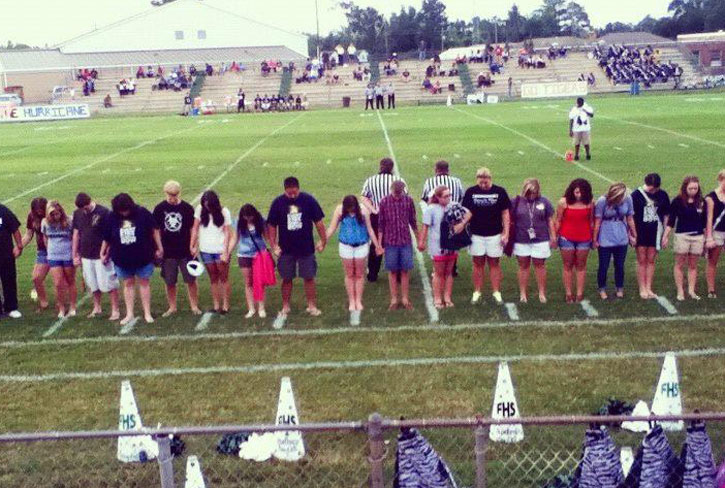
The Escambia County (Ala.) School District has banned prayers at events like football games, but that did not stop a group of Flomaton High students from taking a stand on the football field last Friday.
The students stood hand-in-hand along the sidelines before the game in prayer. No faculty or staff took part in the student led, student initiated prayer.
Prayers led over the public address system at Flomaton High School football games was common prior to this year, as was the recital of the Lord’s Prayer by both players and coaches following Hurricane football games.
But that all came to an end prior to Flomaton’s Friday night season opener against Monroeville after the school district received a letter from the Freedom from Religion Foundation that claimed such prayers were illegal.
“A local complainant has reported to us that Flomaton High School has a local pastor, often a Baptist minister, pray before each home football game. This practice is unconstitutional,” FFRF attorney Andrew L. Seidel wrote in a letter to Escambia County (Ala.) School Superintendent Randall Little and Flomaton High Principal Scott Hammond. “It is illegal for a public school to organize, sponsor, and lead prayers at public school events. The Supreme Court has continually struck down formal and teacher or school-led prayer in public schools.”
The Freedom from Religion Foundation is a national nonprofit group with about 19,000 members with the purpose to “protect the constitutional principal of separation between state and church”.
“We ask that Escambia County Public Schools commence an immediate investigation into the complaint alleged, and take immediate action to stop any and all prayers occurring before all Escambia County Public Schools athletic events, including those at Flomaton High School,” Seidel wrote.
The school district responded to the letter by enforcing a ban against facility and students from participating in or leading prayer at school sponsored events.
Voting Ends Monday: Farmer’s Market In The Running For America’s Favorite
September 2, 2012
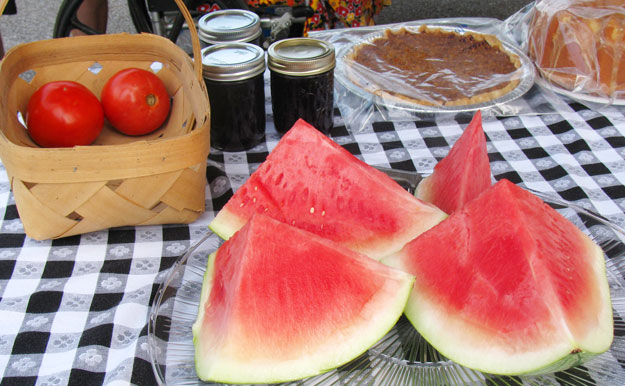
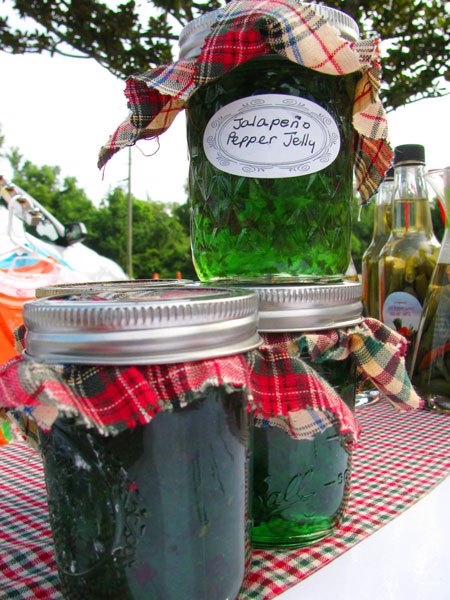 A Cantonment farmer’s market is in the running to be named one of America’s Favorite Farmer’s Markets, and your final chance to vote is Monday.
The Market at St. Monica’s is one of the contestants in the 2012 competition hosted by the American Farmland Trust. Winners will be featured on the food website Epicurious.com and will be honored at local celebrations with a prize package.
Market shoppers can cast their vote in support of their region’s farmers, community and market. To vote for The Market at St. Monica’s, click here and select the market. After voting, American Farmland Trust will solicit a donation to protect American farmland, but donations are not required to vote.
The Market at St. Monica’s is open on the first and third Saturdays of each month from 8 a.m. until noon with a variety of locally grown produce and other merchandise at St. Monica’s Episcopal Church at 699 County Road 95-A South in Cantonment.
The market will be open again September 15.
Pictured: Scenes from a recent Market at St. Monica’s. Submitted photos for NorthEscambia.com, click to enlarge.
Gardening: Fall Veggies Are Cool To Grow In North Escambia Area
September 2, 2012
In Northwest Florida, vegetable lovers can enjoy harvests from their backyard gardens throughout the year. However, to ensure a productive and enjoyable vegetable garden, you must understand and abide by planting times.
 In general, vegetable crops can be grouped into warm-season and cool-season varieties. Warm-season crops do not grow well at temperatures below 50 degrees F and are killed by frost. Cool-season crops are those that grow at lower temperatures, are not injured by light frost, but can’t take the heat.
In late summer and early fall, North Florida gardeners experience a unique opportunity. You can still plant another round of warm-season crops and/or start your cool-season vegetables.
Planting of warm-season vegetables gets to be more critical with the fall garden because we have an end point—frost and freezes. When planted too late, plants will grow, but may not provide enough of a harvest to make the effort worthwhile. Examples are peppers, eggplants and tomatoes. These vegetables can easily take up to two months from transplanting to producing the first fruit. All the time, the fall is getting shorter in day length and cooler in temperatures. That’s really tough on “warm-loving,” full-sun plants.
Since timing is so important with the fall crop, choose warm-season crops that will produce well within a short time. Look for fast-maturing and determinant or bush-type cultivars to ensure a good yield before frost.
Crops to plant outdoors in August include bush and lima beans, cauliflower, collards, cucumbers, onions, southern peas, peppers, squash, tomato and turnips.
In September, you can set out beets, broccoli, cabbage, carrots, endive, kale, kohlrabi, mustard and radish.
The cooler temperatures of October are better for planting Chinese cabbage, lettuce and spinach.
 To find specific recommendations on when to plant vegetables in Florida, read the UF/IFAS “Vegetable Gardening Guide”. It’s online at edis.ifas.ufl.edu/vh021
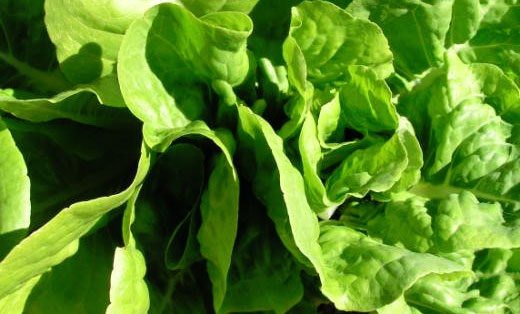
The leafy crops excel in the fall. Some of the more popular leafy crops are Swiss chard, collards, spinach, mustard, turnip greens and lettuce. Endive, escarole, kale, arugula and the greens of mesclun mix also do very well during the cooler months.
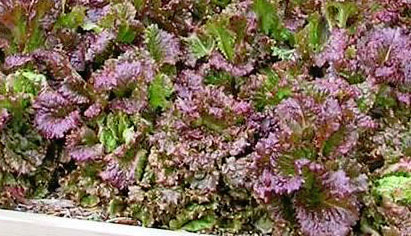
Garden lettuces can be divided into three classes based on habit of growth – leaf or loose-leaf types, semi-heading types (such as butterhead and romaine) and heading or crisp-head types.
Crisp-head lettuces, such as the iceberg types available in supermarkets, are more of a challenge to grow here, so its recommend you stay with the leaf and semi-heading varieties. Other than generally avoiding the heading types, feel free to try just about any variety that strikes your fancy.
Leaf lettuces are the most decorative and least-demanding. They also are among the most heat-tolerant lettuces. This type of lettuce grows in a loose rosette of foliage, and the leaves can be smooth or crinkled, pointed, lobed, curled or ruffled. Foliage color runs from deep ruby red to dark green to pale greenish yellow, with just about every combination in between.
Collards will withstand wide ranges of temperatures if properly conditioned. They may be direct seeded and or plants can be transplanted. Collards may be harvested by cutting the whole plant or by “cropping” individual leaves.
Onions are generally grown from sets or plants. Sets and plants will require about six to eight weeks to reach eating size. Bulbing onions will not be ready to harvest until spring.
Radishes are fast growers and fun for the kids. Many are ready to harvest 25 to 30 days after planting.
So take the leap and “fall” into vegetable gardening.
Theresa Friday is the Residential Horticulture Extension Agent for Santa Rosa County
Guntner Graduates Twice From FSU, Working Toward Law Degree At UF
September 2, 2012
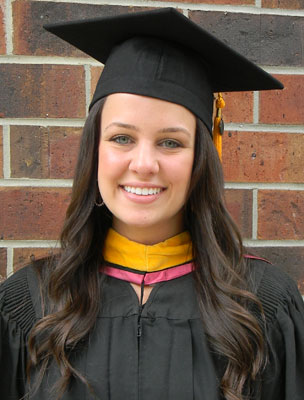 A 2008 Tate High School graduate is working hard toward her goal of becoming a lawyer.
Debra Nicole Guntner, known to her friends as “Nikki”, received her bachelor’s degree in political science from Florida State University in April 2011 and graduated again last month from FSU with a Masters of Science in applied American politics and policy. She then enrolled in the Fred Levin School of Law at the University of Florida working toward her Juris Doctorate. Guntner will study at UF for the next three years as she prepares for her career as an attorney.
Nikki Guntner is the daughter of Barry and Dara Guntner of Cantonment. Her grandparents are Clyde and Helen Allen of Cantonment and George and Jeanette Guntner of Milton.
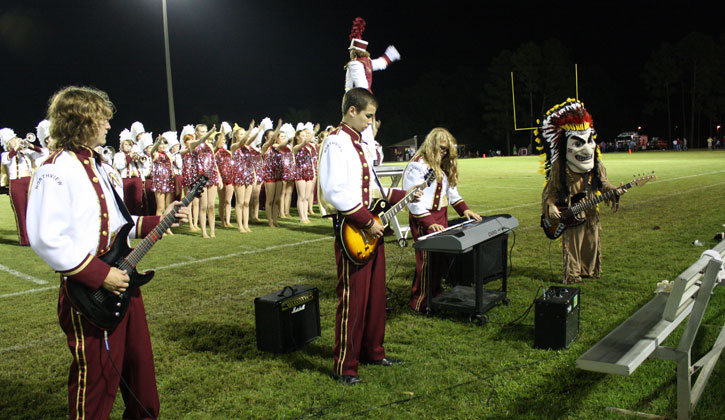
Photo Gallery: Northview Cheerleaders, Band And Dance Team
September 2, 2012

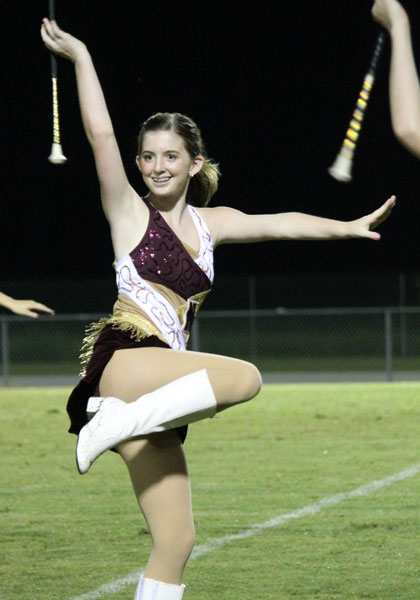 The Northview Chiefs defeated the Panthers of John Paul Catholic School of Tallahassee Friday night in Bratt.
For a photo gallery with the Northview cheerleaders, band and dance team, click here.
For a game summary and action photos, click here.
NorthEscambia.com photos, click to enlarge.
Flomaton Lions Present $2,500 To School System To Help Needy Students
August 30, 2012
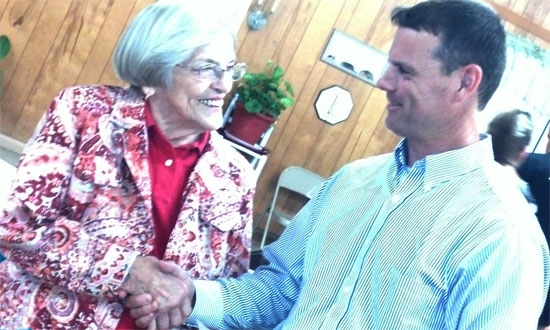
The newly re-formed Flomaton Lions Club recently made a $2,500 donation to Flomaton schools to provide financial assistance to eligible students. The money included $1,500 earned at a pancake supper plus a$1,000 donation that will be used to assist needy students with required school uniform purchases.
Flomaton High School has formed a Flomaton Lions sponsored LEO Club, sponsored by JJ Hagen to help students develop leadership skills and become conscious of helping others. The Flomaton Lions also presented $150 to the LEO Club.
The Flomaton Lions Club meetings on the first and third Tuesday night of each month at 6:00 at the Flomaton Community Center. New members are welcome.
Pictured above: Ruth Harrell of the Flomaton Lions Club presents a $2,500 donation to Flomaton High School Principal Scott Hammond to provide financial assistance to eligible students. Courtesy photo for NorthEscambia.com, click to enlarge.
Photo Galleries: Back To School
August 21, 2012
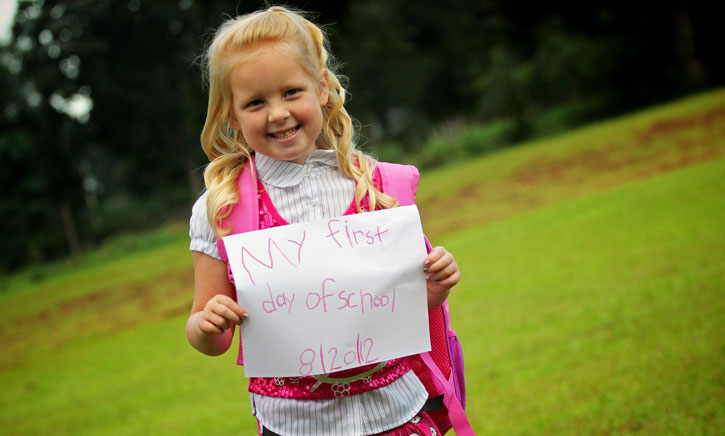

Tens of thousands of students in the North Escambia area headed back to class on Monday. NorthEscambia.com invited parents to submit their back to school photos. Click a gallery name below to see some of the reader submitted photos.
Pictured top: Aubree Jordan on her first day of kindergarten at Molino Park Elementary School. Pictured inset: Mike, second grade, and Emily, first grade, are ready to head to Jim Allen Elementary School. Pictured below: Christopher, Hope and Blayne Miller all buckled up on the way to Jay High School. Reader submitted photos for NorthEscambia.com, click to enlarge.

Marine Aviation Memorial Tower Dedicated
August 20, 2012
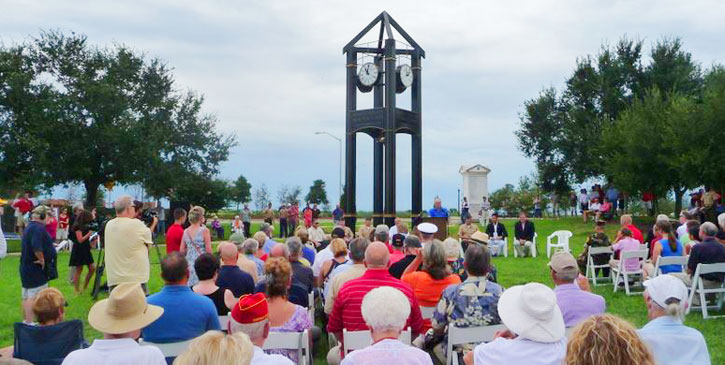
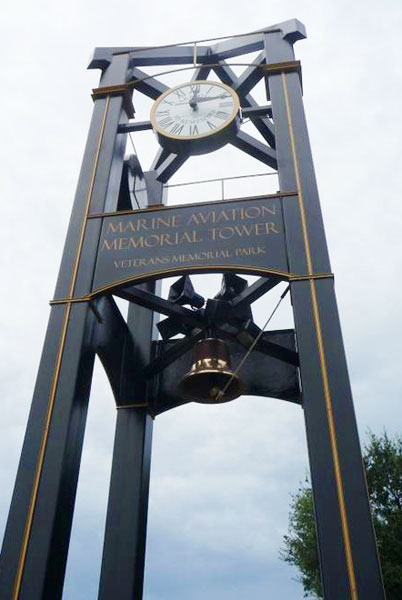
Hundreds of people attended a dedication ceremony Sunday morning for the new Marine Aviation Memorial Tower.
The 30-foot tall steel tower, commemorating 100 years of Marine Aviation and honoring all Marine aviators, stands at the Veterans Memorial Park on Bayfront Parkway in Pensacola.
The tower was funded entirely by donations. Organizers say they still need about $40,000 to pay for a Memorial Plaza to be constructed around the tower. They hope to have the plaza in place by November.
The tower traveled in a motorcade through North Escambia Thursday afternoon. Read more…
Pictured: The Sunday morning dedication of the Marine Aviation Memorial Tower in Pensacola. Photos by P.C. Wu for NorthEscambia.com, click to enlarge.
Think It’s Rained A Lot?
August 20, 2012
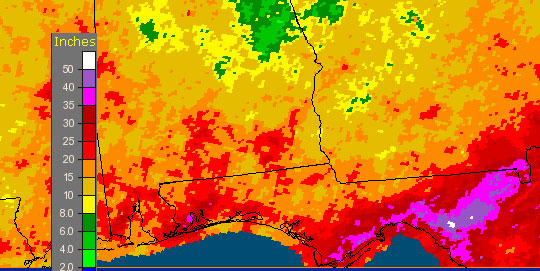
If you think it’s been wet lately, you would be correct, according to the National Weather Service in Mobile. The area has seen quite a bit of rainfall over the past 90 days, seen on the graphic above.
Over the last 90 days, there has been 15-20 inches of rainfall across northern Escambia County, 20-25 inches in the central part of the county, and from 30 to 40 inches across the southern part of the county.
The higher rainfall totals seen on the map across northern Florida were due to Tropical Storm Debby.
NorthEscambia.com graphic, click to enlarge.
Health And Hope Clinics Provide $1.7 Million In Free Medical Care
August 19, 2012
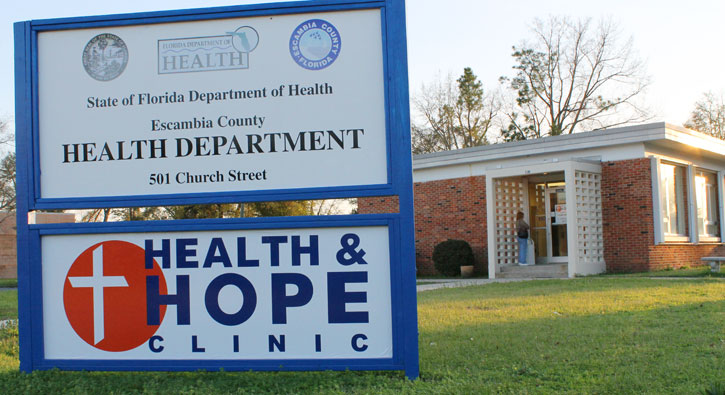
The Health and Hope Clinics in Pensacola and Century have provided well over a million and half dollars worth of free medical care to local residents during the past year.
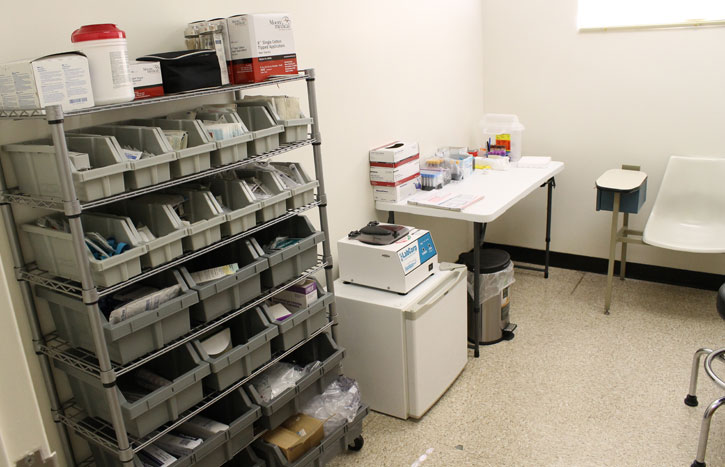 During the last year, the two clinics had 2,000 patient visits and provided $1 million in free medications. The grand total of all services provided to economically disadvantaged and uninsured residents was $1.7 million.
The Health and Hope Clinic quietly opened in October in the old Escambia County Health Department building at 501 Church Street in Century. It is the second location for the clinic, which was first established in Pensacola back in 2003 by the Pensacola Bay Baptist Association to meet the needs of uninsured and medically underserved in Escambia County. The clinic is entirely volunteer and donor supported.
To become a patient of Health and Hope Clinic, you must:
- be completely uninsured
- be ineligible for Medicare, Medicaid, or VA medical benefits
- meet financial eligibility requirements as determined annually by the State of Florida
To schedule a new patient screening appointment, call (850) 479-4456. Only a limited number of new patients are accepted each month. To volunteer, call (850) 256-6200 or (850) 479-4456. For more information on the Health and Hope Clinic and services, visit www.healthandhopeclinic.org.