

Residents Learn About Composting
January 19, 2013

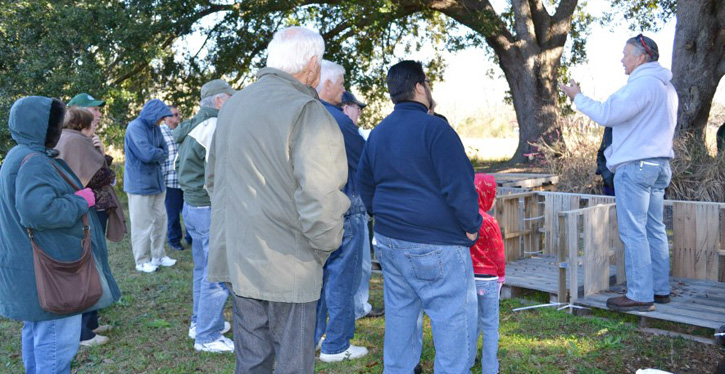
Area residents learned Friday how to turn landscape and vegetable scraps into black gold during an program offered by the Escambia County Master Gardeners. The “Garden Talks: Composting” program was held at the Escambia County Extension Office Cantonment. Courtesy photos for NorthEscambia.com, click to enlarge.
Longtime Central Water Works Board Member Glenn Grant Steps Down
January 18, 2013
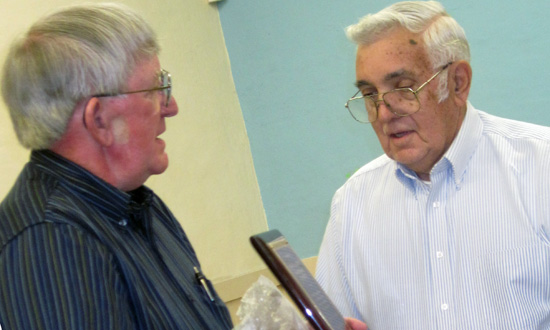
A longtime member of the Central Water Works board of directors was honored recently during the water provider’s annual meeting at Byrneville Elementary School.
Glenn Grant stepped down from the seven member volunteer board after more than 21 years of service. He was presented a plaque on behalf of the remainder of the board and the membership of Central Water Works in appreciation of his faithful years of dedicated service to the water system and the community.
Pictured top: Central Water Works Board President Gary Welch (left) presents a plaque to retiring board member Glenn Grant. Submitted photo for NorthEscambia.com, click to enlarge.
Fill A Bowl For Manna
January 18, 2013

Fill a Bowl for Manna will be held Saturday to benefit the local food bank that serves clients across the area.
Attendees will fill their keepsake ceramic bowl with sumptuous soups from several restaurants while helping Manna fill the empty bowls of more than 44,000 people in Northwest Florida.
Fill a Bowl for Manna will take place this Saturday, January 19 at the Jean & Paul Amos Performance Studio of WSRE-TV at 12th and College from 1-3 p.m.. Admission of $30 entitles guests to a ceramic bowl keepsake filled with soups by local eateries. Reservations are requested, but walk ins are welcome.
Reserve your spot online at www.mannafoodpantries.org.
Courtesy photo for NorthEscambia.com, click to enlarge.
Atmore Native Named A Pensacola ‘Rising Star’
January 18, 2013
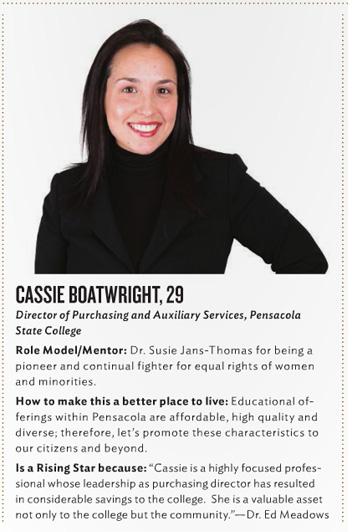 A second North Escambia area native was among those named as a “Rising Star 2013″ in Thursday’s issue of the Pensacola Independent News.
Cassie Boatwright, 29, is director of publishing and auxiliary services for Pensacola State College. The Atmore native grew up in Nokomis and now lives near Stockton, Ala. She graduated from the Alabama School of Math and Science and will finish her doctorate this fall.
Thursday, we introduced readers to 27-year old Ashley (Wallace) Spikes, a 2004 Northview graduate that was named to the Rising Star list (read more…).
The Independent News Rising Stars program has honored Escambia and Santa Rosa leaders in the under-35 crowd since 2008. To read more, and see the 2013 Rising Stars, click here.
I Always Wanted To Fly: Local Veteran Publishes Book
January 17, 2013
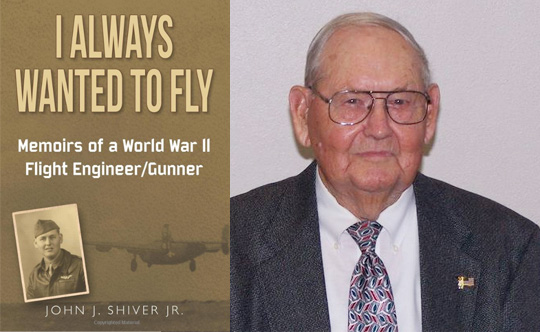
A local veteran has written his memoirs as a World War II flight engineer and gunman.
“I Always Wanted To Fly: Memoirs of a World War ll Flight Engineer/Gunner”, is factual account of missions flown by John Shiver, Jr.of Atmore.
From the time Shiver saw his first plane in the sky at age three, he wanted to fly. He went on to serve in several U.S. Army Air Corp groups during World War II, completing over 75 European combat missions. His heartfelt descriptions were meticulously detailed in his handwritten personal journal. Family and friends helped Shiver, now 92, share those stories in his new book.
“The Lord allowed me to fulfill my desire in a way I never dreamed I would,” Shiver said.
The book is available at Amazon.com (click here). The book will also be available at a signing event on Saturday, January 19 from 10 a.m. until noon and Friday, February 1, from 2 until 4 p.m. at the VFW Post in Atmore.
Shiver’s service included time with the 8th Air Force. 389th Bomb Group. England 9th Air Force. 98th Bomb Group. 344th Sqd. Libya 12th Air Force. 98th Bomb Group. 344th Sqd. North Africa 15th Air Force. 98th Bomb Group. 344th Sqd. Italy.
Pictured top: Atmore veteran John Shiver, Jr. and his new book. Pictured below: Shiver standing in front of the B-24 bomber “Witchcraft” in Mobile. Courtesy photos for NorthEscambia.com, click to enlarge.

Northview Grad Named A ‘Rising Star’ By Pensacola Newspaper
January 17, 2013
 A 2004 Northview High School graduate was among those named as a “Rising Star 2013″ in today’s issue of the Pensacola Independent News.
Ashley (Wallace) Spikes, 27, is the government partnership manager of the Greater Pensacola Chamber of Commerce.
The Independent News Rising Stars program has honored Escambia and Santa Rosa leaders in the under-35 crowd since 2008. To read more, and see the 2013 Rising Stars, click here.
Tickets Going On Sale For Miss NHS Pageant
January 15, 2013
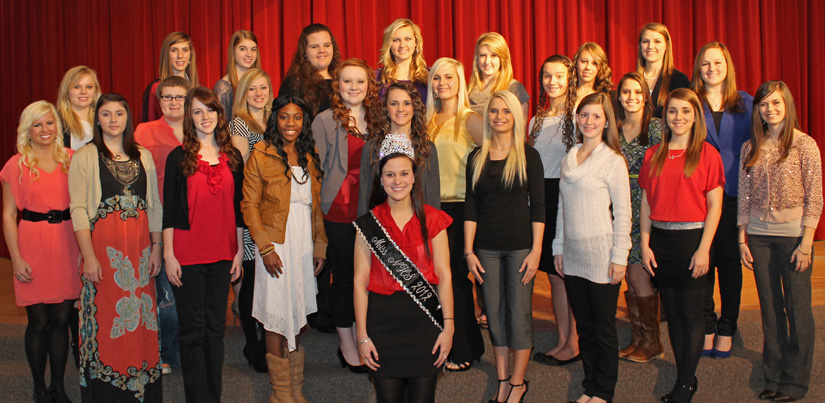

Tickets go on sale Wednesday for the 2013 Miss NHS pageant at Northview High School.
The “Reach for the Stars” pageant will be held Saturday, January 26 at 7 p.m. in the school theater. Tickets are $6 each in advance, $10 at the door. The pageant usually sells out in advance.
Pictured above: Miss NHS 2013 contestants (front row, L-R) Ashley Cunningham, Penny Banda, Julia Thorpe, Shaquanna Jones, Tiffani Pritchett, Jody Paramore, Julie Hester, Ashley Mooney,Mariah Albritton, (middle) Lily Townson, Audra Martin, Ariel Holland, Olivia Neal, Karmen Watson, Clarissa Ross, Kamryn Brock, Courtney Lambert, (back) Misty Doran, Rebekah Sepulveda, Ashlynn Mccall, Morgan Ward, Lauryn Walker, Kaitlyn Abbott, and Kendal Cobb. Pictured in front of the group is Miss NHS 2012 Charlie McPherson. Pictured left inset: A few of the contestants practice a dance routine.
NorthEscambia.com photos, click to enlarge.
Ripley Named President Of Century Chamber Of Commerce
January 14, 2013
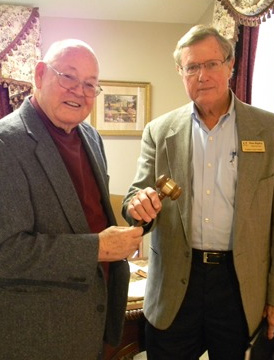
Don Ripley has been named the new president of the Century Chamber of Commerce, taking over for outgoing president Benny Barnes.
 “I’m proud to do what I can for Century as I’ve come to love the people here,” Ripley said. “I’d like to see more people active in the chamber. That would allow us to implement new ideas and garner suggestions to improve our employment opportunities. Ideally, we would like to create an environment that allows our kids to stay in the area after their education is complete.”
Ripley has served as administrator of the Century Care Center since 1999. He has served on the Century Chamber of Commerce Board for 13 years, including two previous years as president and vice president for about 10 years.
Barnes will remain on the all-volunteer chamber’s board of directors.
Pictured: Outgoing Century Chamber of Commerce President Benny Barnes (left) passes the gavel to new President Don Ripley. Courtesy photo for NorthEscambia.com, click to enlarge.
Weekend Gardening: Tips for January
January 12, 2013

Here are gardening tips for the month of January from the Santa Rosa Extension Service:
Flowers
- Refrigerated bulbs such as tulip, daffodil and hyacinth should be planted in prepared beds.
- Start seeds of warm season flowers late this month in order to have transplants in March.
- There’s still time to transplant some cool season annuals such as carnations, foxglove, pansies, petunias and snapdragons.
- Re-fertilize cool season flowerbeds, using a liquid or dry form of fertilizer. Be careful not to apply excessive amounts and keep granules away from the base of stems.
- Finish dividing crowded perennials. Don’t wait until spring for this job.
- Plant bare root roses immediately after they are purchased.
Trees and Shrubs
- Plant trees and shrubs. This is an ideal time of year for transplanting larger specimens.
- Plant bare root plants such as deciduous ornamental shrubs and trees.
- Prune dormant shade trees, if needed.
- Stick hardwood cuttings of fig, grape, honeysuckle, Althea, Catalpa, Forsythia and Wisteria.
Fruits and Nuts
- Apply dormant oil spray to peach, plum, nectarine and other deciduous fruit trees. This practice is necessary when growing the stone fruits in locations along the Gulf Coast. Note: This applies to the flowering peaches and cherries since they are susceptible to the same pests as their fruiting cousins.
- Plant bare root deciduous fruit trees
- Prune dormant fruit trees if needed
Vegetable Garden
- Start seeds of warm season vegetables late this month in order to have transplants in March.
- Lime (if needed), and begin preparing vegetable gardens for the spring planting.
- Cool season vegetables that can still be planted in the garden are: beets, broccoli, cabbage, carrots, cauliflower, celery, Chinese cabbage, kale, kohlrabi, leek, mustard, bunching onions, parsley, English peas, Irish potatoes, radishes and turnips.
- Irish potatoes can be started from January through March by planting seed pieces 3 to 4 inches deep in rows. Always purchase certified seed potatoes.
Lawns
- Check soil moisture during winter and water as needed.
Blood Drives Scheduled In Honor Of Tate Senior Halee Boyd
January 10, 2013
Friends and family of Tate High School student Halee Boyd have scheduled blood drives to help with her cancer treatments.
 Boyd, 18, was diagnosed with a life-threatening cancer. Her medical treatments have interrupted her senior year at Tate.
Blood drives at two locations are planned Saturday, January 12 in her honor:
- The Spinal Center, 2921 Michigan Avenue, 11 a.m. – 4 p.m.
- Red Lobster, Cordova Mall, 11 a.m. – 5 p.m.
Generally, healthy people age 16 or older who weigh at least 110 pounds can donate blood.