

Halteman, Driver Wed
October 6, 2013
 Lyndon and Norma Halteman from Walnut Hill are pleased to announce the marriage of their son, Jeremy Halteman to Bethany Driver. Bethany is the daughter of Daryl and Kay Driver from Harrisonburg, VA.
The wedding was on August 10, 2013, at the Dayton Mennonite Church in Harrisonburg, VA. A reception was also given in their honor on September 7, 2013, at Mennonite Christian Fellowship in Atmore.
Jeremy is a 2008 graduate of Northview High School and a 2013 graduate from St. Petersburg College. Bethany graduated from Clearwater Christian College in 2012 with a major in business administration. They are currently living in Baltimore, MD, where Jeremy is completing his two year residency program for orthotics and prosthetics.
Molino Park Elementary Students Learn Fire Safety (With Photo Gallery)
October 4, 2013
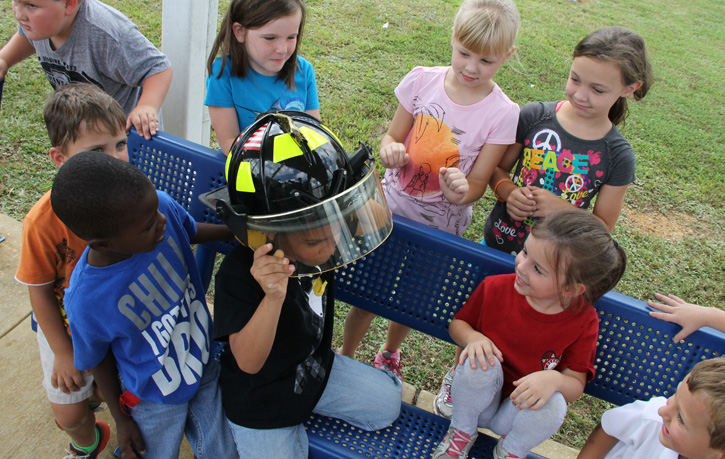
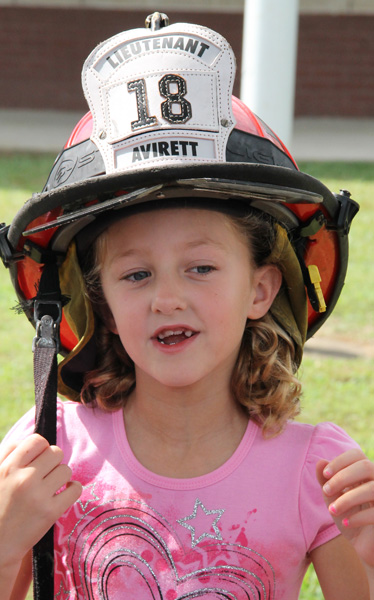
Molino Park Elementary School students learned about fire safety Thursday from members of the Molino Station of Escambia Fire Rescue. The students learned how to get out of their home in the event of a fire and also learned about some of the tools used by firefighters.
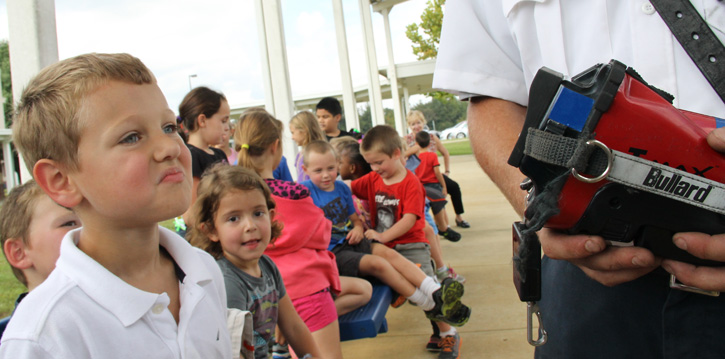
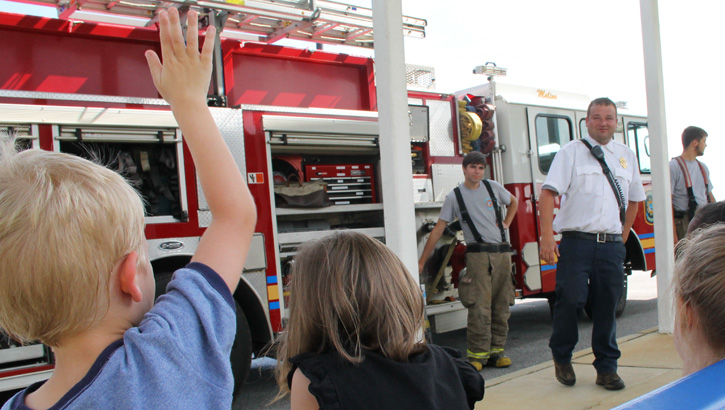
Pictured: Molino Park Elementary students learn all about fire safety Thursday morning. Pictured top and inset: The firemen’s helmets were a student favorite. Pictured below: Students use a camera to look for hot spots. Pictured bottom: Students had an opportunity to ask questions. NorthEscambia.com photos, click to enlarge.
Carters Named Escambia County Outstanding Farm Family
October 3, 2013
The Matt Carter Family has been named the 2013 Escambia County Outstanding Farm Family.
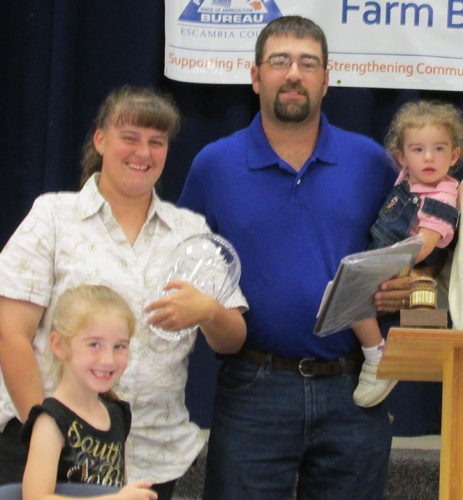 Matt has been married for eight years to Dawn, and they have two girls — six-year old Emily and almost-two Jayden. They work together on their farm on Byrneville Road to being the freshest, highest quality vegetables direct to local consumers at their Matt’s Produce stand and weekly at the Palafox Market in Pensacola.
Matt grew up working alongside his father, Lance Carter at Crary Dairy. As a youth, he was a member of the Northview FFA chapter and was chapter president. He is still very active in supporting agriculture as a member of the EscaRosa Young Farmers and Ranchers.
For a number of years, he worked off the farm at the West Frazier Sawmill. But when it closed in 2008, he saw the opportunity to open his own farming operation. He saw the interest for local produce steadily increasing and knew that he wanted to be a part helping to supply homegrown vegetables to Escambia County resident. His business started small with tomatoes, squash, cucumbers, and zucchini which he sold at the farmstand on Byrneville Road, but quickly joined the Palafox Market to sell his product.
Over the past five years, the Carters have expanded their operation both in acreage and product variety. Throughout the year, Matt and Dawn produce peppers, tomatoes, squash, potatoes, onions, zucchini, turnips, mustards, collards, cabbage, broccoli, cauliflower, peas, and butter beans. Future plans included a certified kitchen at the product stand so they can sell value added items straight to the consumer.
“Gallery Night” Held In Century
October 2, 2013
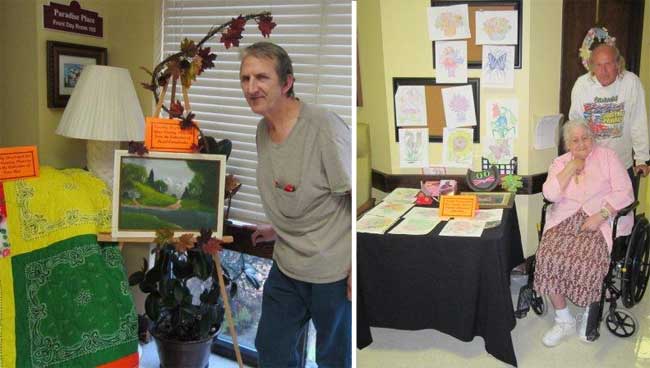
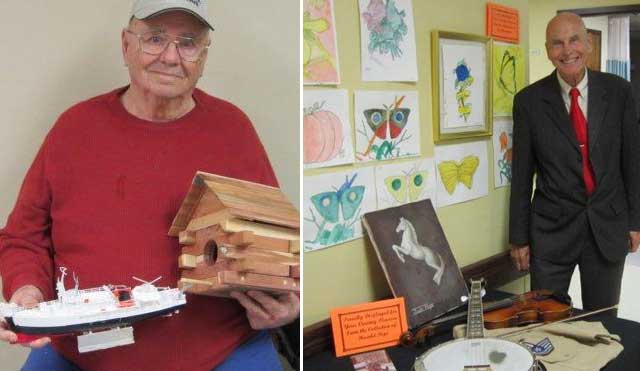
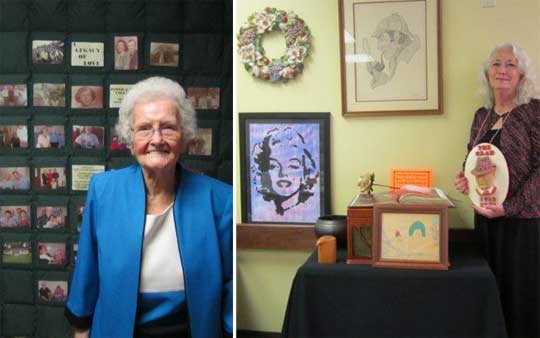
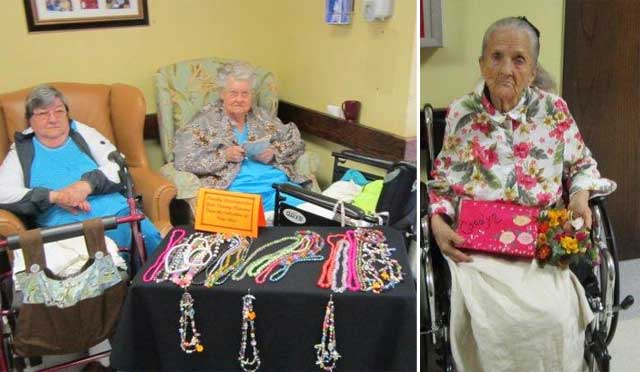
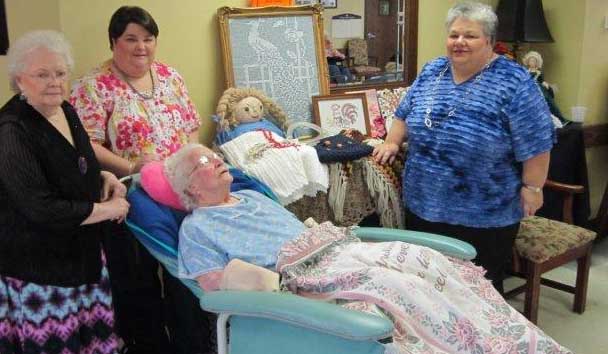
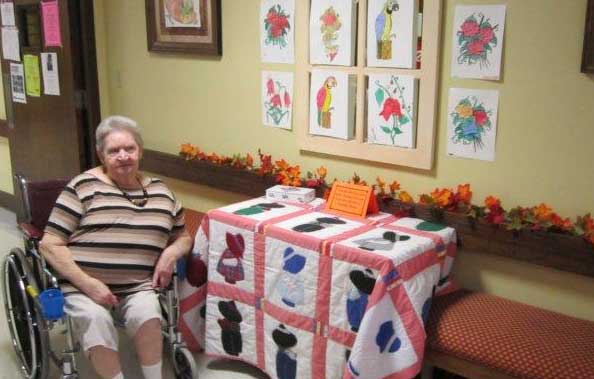
A “Gallery Night” was held recently in Century.
The Century Care Center hosted the first-ever event for the town, featuring artistic creations by Century Care residents. Staff and family members were also encouraged to bring their own artistic creations for display.
Items on display included paintings, colorings, handcrafted items, pottery and more.
Pictured above and below: Gallery Night at the Century Care Center. Submitted photos for NorthEscambia.com, click to enlarge.
Local Church Gives New Pastor A Good Pounding
October 1, 2013
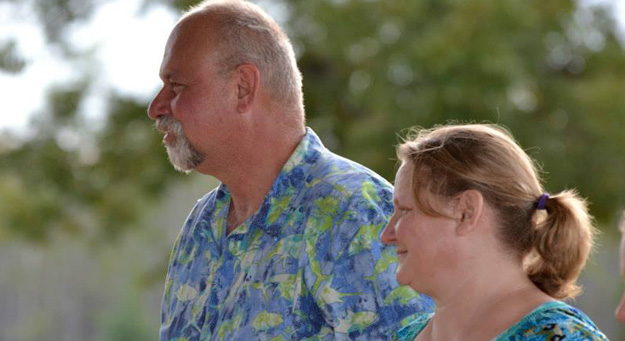
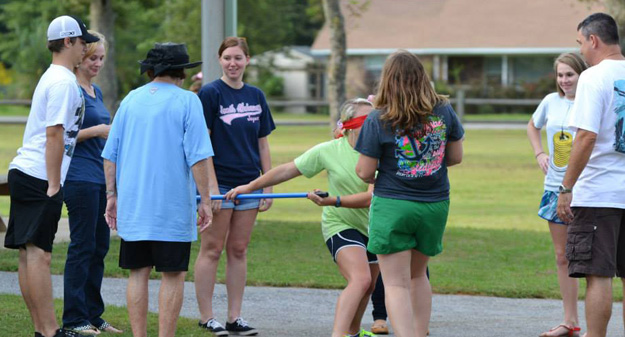
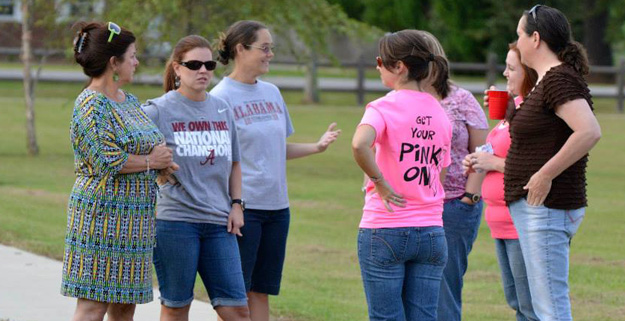
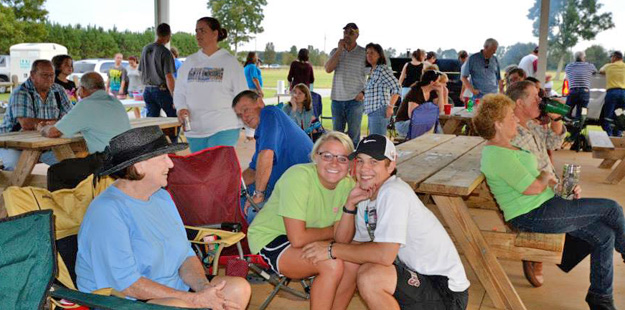
The members of one local church gave their new pastor and his family pounding Sunday night, and then they celebrated his arrival with a picnic.
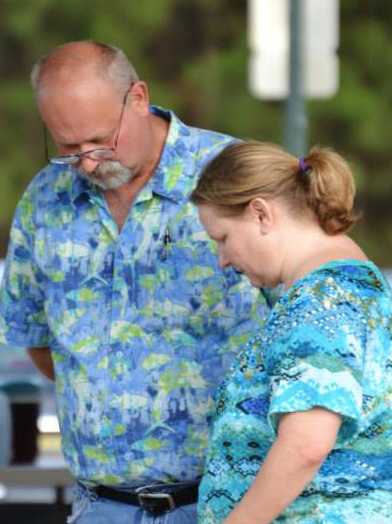 It was the First Baptist Baptist Church of Bratt’s way of welcoming Pastor Delbert Redditt.
A pounding is an old fashioned tradition celebrated in many churches where a new pastor is welcomed to the church with gifts of food. Traditionally, a pounding would provide a pastor and his family with a pound of staples, such as a pound of flour, a pound of sugar, a pound of butter and a pound of other basic items.
The FBC Bratt’s pounding for Redditt was a bit more modern, as church members filled the back of a Nissan Pathfinder with lots of food, canned goods, paper items and even a basket of fresh apples.
Redditt comes to Bratt from Faith Baptist Church in Madison, FL. He has been married to his wife Traci for 24 years. They have two children – Terra Leigh, 19, who attends Valencia College, and Cheynne Dawn, 16, who now attends Northview High School.
Redditt hold a Masters of Ministry from Temple Baptist Seminary, a Masters of Agricultural Education from the University of Florida, and a Bachelor of Arts in sociology from the University of Central Florida.
Pictured top and inset: New First Baptist Church of Bratt pastor Delbert Redditt and his wife Traci. Pictured below: Church members held a picnic to welcome Redditt Sunday evening at the Travis M. Nelson Memorial Park in Bratt. Submitted photos for NorthEscambia.com, click to enlarge.
Chloe Channell To Join Kenny Rogers Christmas Musical In Branson
September 30, 2013

Local “America’s Got Talent” sensation Chloe Channel has joined the cast of Kenny Rogers hit musical “The Toy Shoppe” at the Starlite Theatre in Branson, Missouri, opening November 1 for this Christmas season.
“I am really excited to be a part of all this. It’s going to be amazing!” said Chloe, who will do 60 shows by December 21. The show, written by Kenny Rogers and Kelly Junkermann stars country sensation Billy Dean.
“The only way you can do a play with heart, is to have a cast with heart…and that’s harder than it sounds,” said Rogers. “There are a lot of people who can sing the notes, but very few who can make you believe the passion and the joy of the musical journey. My friend Billy Dean certainly can do all of those things and when I listened to Chloe, I knew she would be very special as well.”
“The Toy Shoppe” is a place where toys come to life and children gather to hear owner Hank Longley tell stories. The audience joins Hero the Dog, Cheeseball the Mouse, Bruno the Bear and Billy Dean as Hank Longley in this story of love, faith and appreciation for the value of every individual. The story is full of old-fashioned values and is great entertainment for the entire family.
“It’s gonna be so COOL!! I can’t wait,” Chloe wrote on her Facebook page. “So make plans to come see me.”
Finding new talent has always been a trademark of Kenny Rogers shows. Garth Brook’s first national tour was opening for Kenny Rogers at Christmas.
Wilcoxon Graduates, Receives Wings At Fort Rucker
September 30, 2013
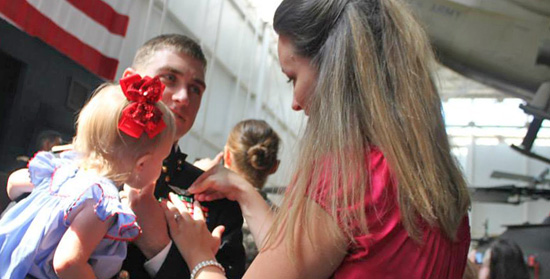
WO1 Casey B. Wilcoxon, United States Army, completed the Initial Entry Rotary Wing Aviator Course and was graduated as a pilot from the US Army Aviation Center of Excellence at Fort Rucker, AL.
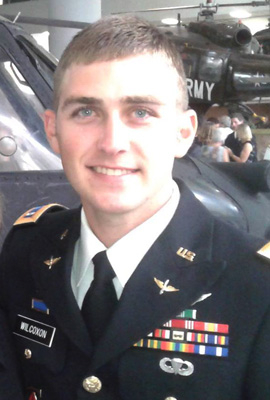 His wife, Kelley, pinned his new wings onto his uniform in a ceremony on September 19, 2013. Mr. Wilcoxon has been in the Army for seven years, formerly as a UH 60 Blackhawk mechanic, having achieved the rank of Sergeant prior to being commissioned as a Warrant Officer.
Casey and Kelley (Parham) are 2006 graduates of Northview High School. They have two daughters, Kali and Kami. The Wilcoxons will be stationed at Ft. Bragg, NC, where he will fly the UH 60 A/M Blackhawk helicopter.
Casey is the son of the late William B. Wilcoxon of Century and Erbie and Pamela Pritchett, also of Century and is the grandson of the late John Wilcoxon and Grace Wilcoxon of Century and James and Mildred Lambeth of Flomaton.
Pictured top: Casey Wilcoxon’s wife Kelley pins his new wings as daughter Kali looks on at Fort Rucker. Submitted photo for NorthEscambia.com, click to enlarge.
Photos: NHS Cheerleaders, Dance Team, Band, NJROTC
September 29, 2013
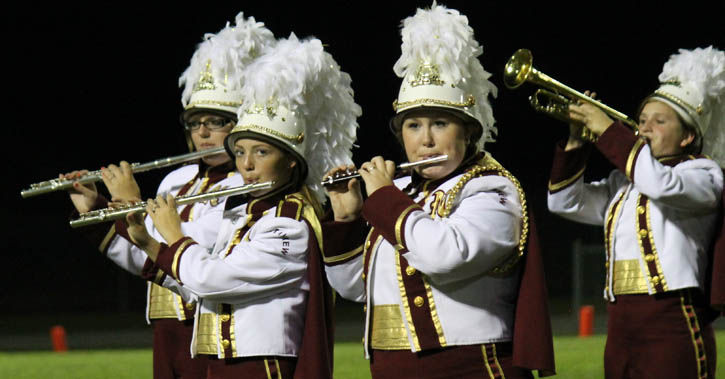

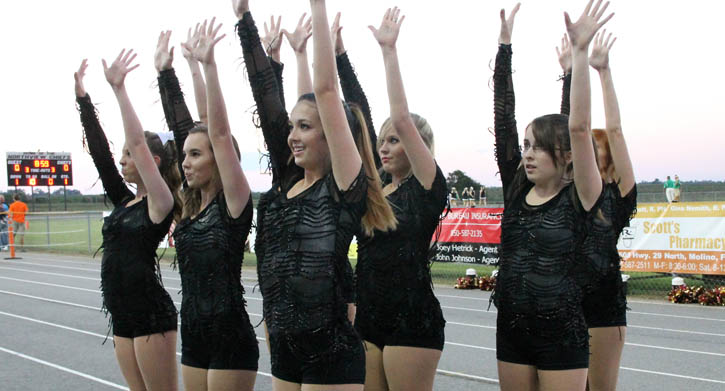
For a photo gallery with the Northview High School cheerleaders, dance team, band and NJROTC from Friday night’s Choctawhatchee at Northview game, click here.
For a game summary and action photos, click here.
15 Years Ago: Hurricane Georges
September 28, 2013
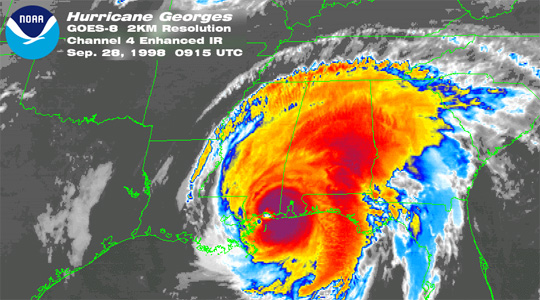
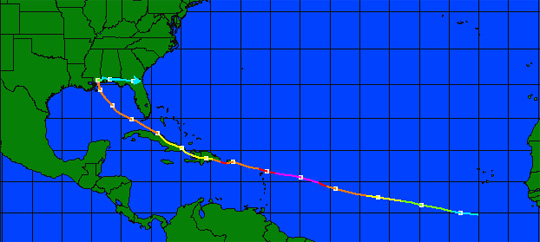
Hurricane Georges made landfall near Biloxi 15 years ago on the morning on September 28, 1998, with maximum winds of 110 mph. Georges moved very slowly across southern Mississippi and weakened to a tropical depression by the morning of the 29th when the center was about 30 miles north northeast of Mobile. The storm dissipated near the northeast Florida/southeast Georgia coast by the morning of October 1, 1998.
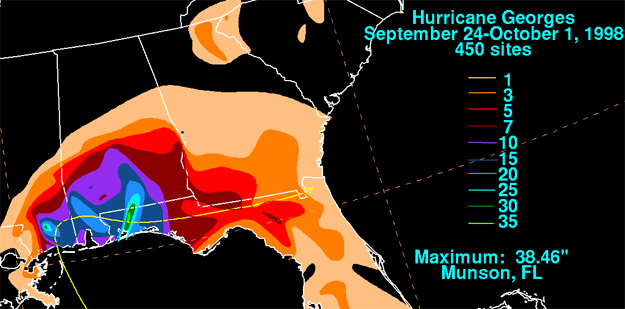
Georges brought torrential rainfall to the Gulf Coast, with Pensacola receiving 26.83 inches of rain, Bay Minette 29.66 inches and Munson 38.46 inches. Numerous other locations received between one and two feet of rain.
Surface observations indicate sustained hurricane force winds were confined to the Mississippi Gulf Coast. The highest sustained winds recorded in Mobile were between 50-55 mph with gusts near 65 mph. The Pensacola area also saw similar sustained winds. However, peak gusts of 79 and 91 mph were recorded at Eglin AFB and Hurlburt Field. These higher gusts likely occurred in a strong convective outer band of the hurricane.
Bondi: From Instant Message To Instant Nightmare
September 28, 2013
Submitted by Florida Attorney General Pam Bondi
According to the National Human Trafficking Resource Center, there are 27 million people enslaved worldwide. Victims of human trafficking are subjected through force, fraud or coercion for the purpose of sexual exploitation or forced labor. In 2011, the National Human Trafficking Resource Center ranked Florida third in the number of calls received by the center’s human trafficking hotline. It is also reported that the average age of children recruited into sex trafficking is between 12 and 14 years old. These heartbreaking statistics are evidence that something needs to be done.
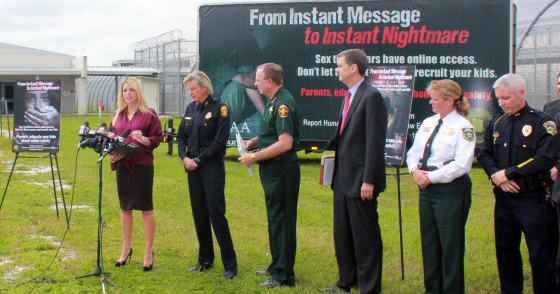
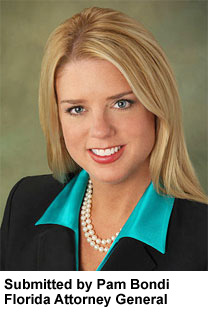 I unveiled a statewide initiative intended to raise awareness about human trafficking and to help parents protect their children from online sex traffickers. The initiative, “From Instant Message to Instant Nightmare,” debuts on billboards, bus shelters, and mall displays throughout Florida.
Parents and adults, please talk to children about the importance of online safety. Visit MyFloridaLegal.com to download a parental tip sheet about online safety and a pledge for children to sign and print. The pledge can be taped to your home computers to serve as a reminder of safe Internet use.
Parents follow these tips to help protect your children from human traffickers online:
- Talk to your children about sex trafficking and sexual abuse. Describe human trafficking as modern-day slavery, where people are captured and treated inhumanely. Awareness is the first step in preventing it;
- Restrict use of the computer to the living room or other area of the house where other family members are present;
- Know your child’s screen names and passwords, even if you have your child write them down and put them in a sealed envelope. If anything happens, you will be able to access your child’s accounts to trace who he or she has been communicating with;
- Use the parental control settings on your computer to check the Internet history. Look for warning signs in your children, such as: mood swings and anxiety; new friends who are significantly older; and new gifts, pre-paid credit cards, clothes or cell phones that you did not purchase; and
- Let your children know that they can talk to you, or a trusted adult, about anything that makes them uncomfortable.
By raising awareness about human trafficking and asking you, as parents, to play an active role in preventing sex traffickers from recruiting your children online, we can help stop this horrific crime.