

Northview Schedules Homecoming Parade; Entries Accepted Now
September 15, 2014
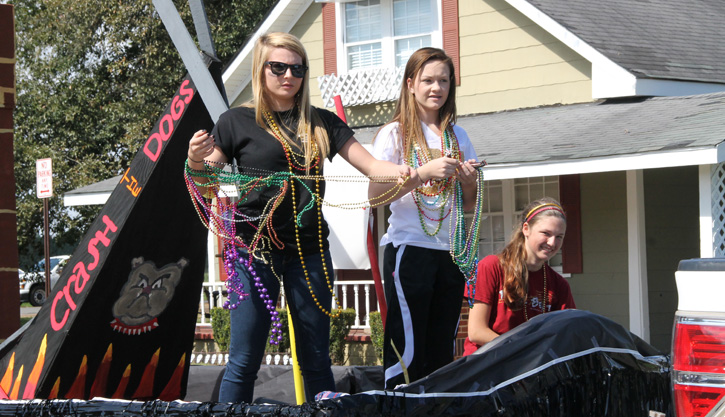
The sixth annual Northview High School Homecoming Parade has been scheduled for Friday, October 3.
The parade will line up at noon and travel from Bratt Elementary School to Northview High. Entries are being accepted now; there is no cost to enter. For a printable entry form, click here. Entries are due by Tuesday, September 30.
Contact Perry Byars at (850) 327-6681 ext. 248 for more information.
The Northview Chief’s homecoming game will kickoff at 7 p.m. on October 3 against the Jay Royals.
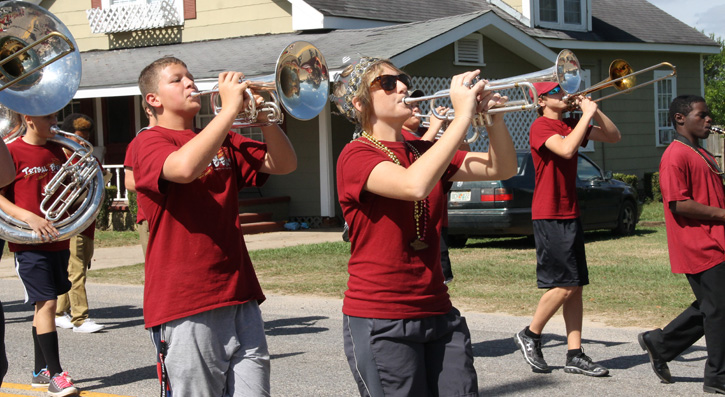
Pictured: The 2013 Northview High School Homecoming Parade. NorthEscambia.com file photos, click to enlarge.
Florida’s Oldest: Barrineau Park 4-H Club Celebrates 100 Years
September 14, 2014
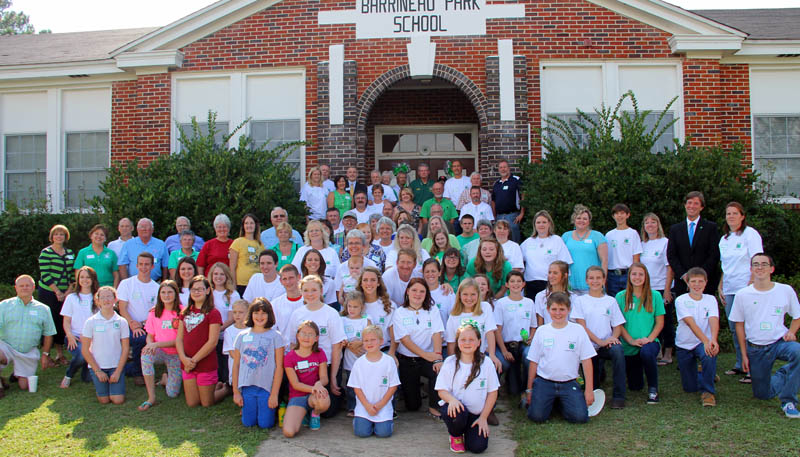
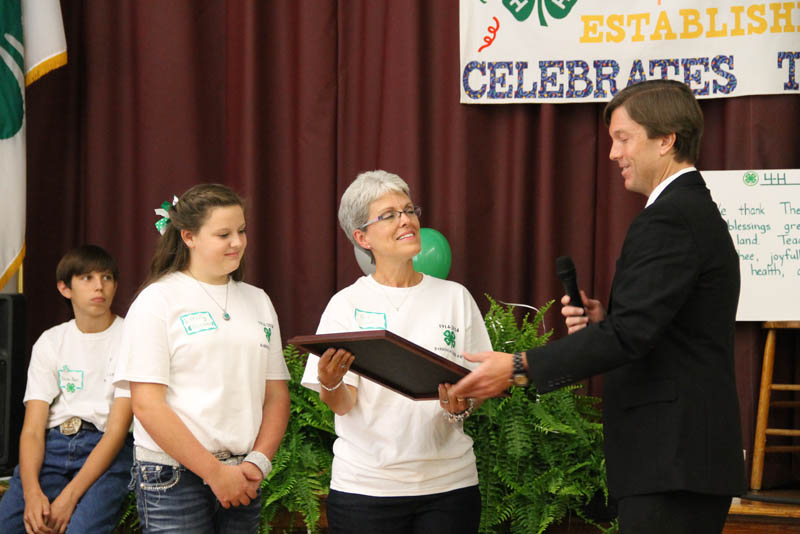
A 100th birthday celebration was held Saturday for the Barrineau Park 4-H Club, the oldest continuously operating 4-H Club in Florida and perhaps in the country.
4-H members past and present shared memories of 4-H — everything from Corn Clubs of days log ago, to raising hogs, to public speaking to photographs on Instagram and Facebook.
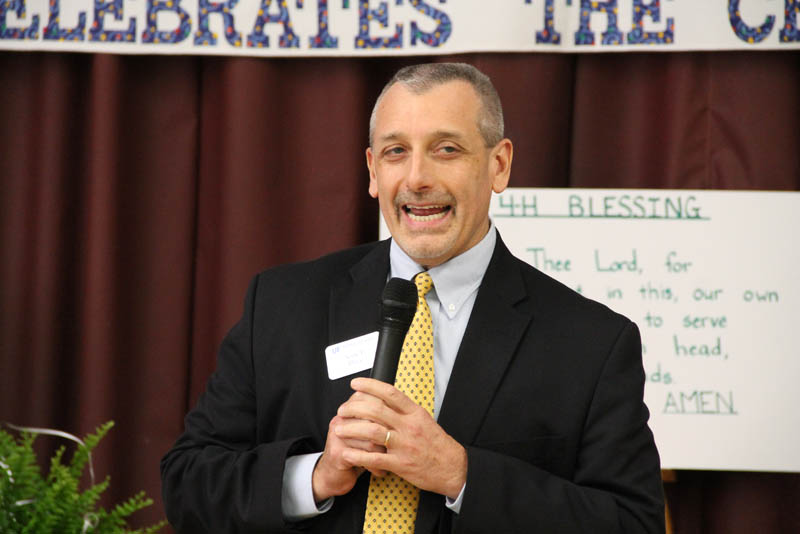 “Early Extension agents were having a hard time working with the adults and helping them understand new technologies and new practices for growing corn and tomatoes and livestock,” Dr. Nick Place, dean of the University of Florida/IFAS Extension program, said while explaining why 4-H clubs were formed 100 years ago. “We were able to really work with the kids and help them understand these new technologies, and they would take that home and then their parents would adopt it.”
The club was presented with numerous honors and awards, including a special message from Congressman Jeff Miller that will be read into the Congressional Record on Monday on the floor of the U.S. House of Representatives.
For a photo gallery, click here.
There are currently 23 students involved in the Barrineau Park 4-H Club who are active in everything from leadership, citizenship, livestock, horses, food and nutrition, environmental education, marine science, shooting sports and public speaking and the club has become known for raising and showing prize-winning hogs.
The club is also celebrating in true 4-H fashion by helping others. Members have been busy performing 100 hours of community service, gathering magazines to donate to nursing homes, collecting shoes for needy families and food for area food banks, baking cookies and cupcakes to give to the local fire department and writing thank you cards to military personnel.
For an earlier story, click here for more of history of the Barrineau Park 4-H Club.
Pictured top: Members, alumni and supporters of the Barrineau Park 4-H Club gather for a 100th birthday photo Saturday outside the Barrineau Park Community Center. Pictured inset: Dr. Nick Place, dean of the University of Florida/IFAS Extension program. Pictured below: Commissioner Steven Barry presents an Escambia County proclamation to the Barrineau Park 4-H Club. NorthEscambia.com photos, click to enlarge.
Northview Tribal Beat Performs At Troy Band Day
September 14, 2014
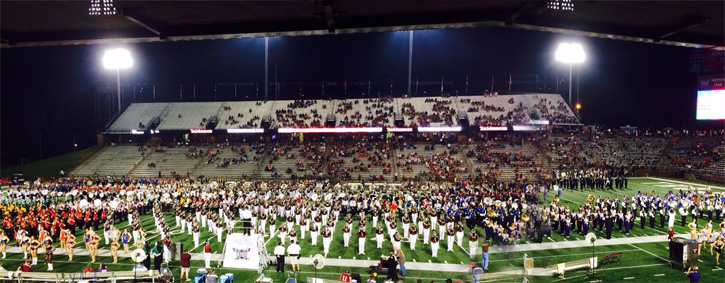
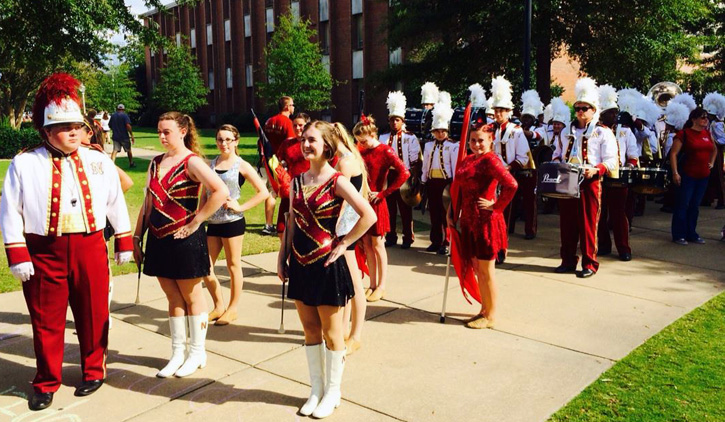
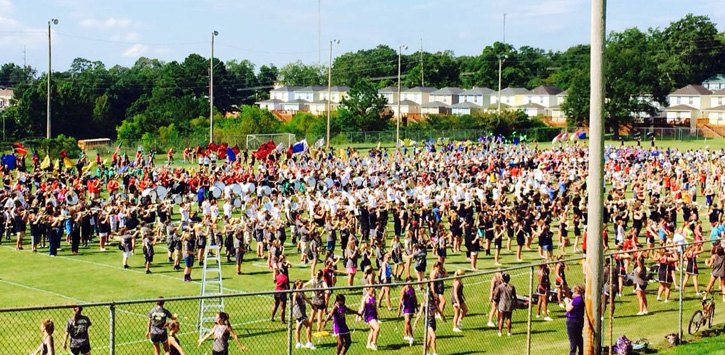
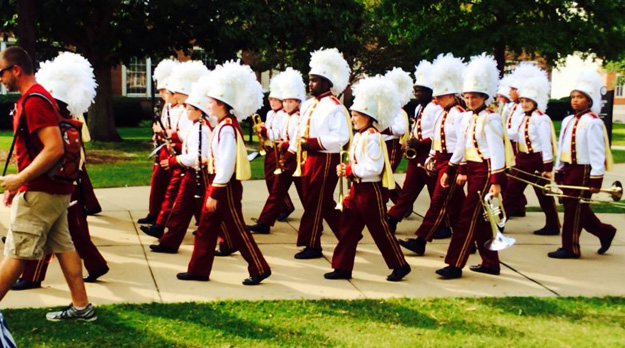 Nearly 2,000 middle and high school band members — including the Northview High School Tribal Beat – performed alongside the Troy University Sound of the South Saturday night during the college’s annual Band Day.
The students were from over 30 schools from Alabama, Florida and Georgia and performed at halftime during the Troy Trojan’s loss to Abilene Christian University.
Northview’ s Tribal Beat and the other bands took part in a rehearsal Saturday morning with the Sound of the South. The bands then took part in the Trojan Victory Parade and the team’s Trojan Walk.
Photos by Connie Brook for NorthEscambia.com, click to enlarge.
Church Back To School Splash Benefits Molino Park Elementary
September 14, 2014
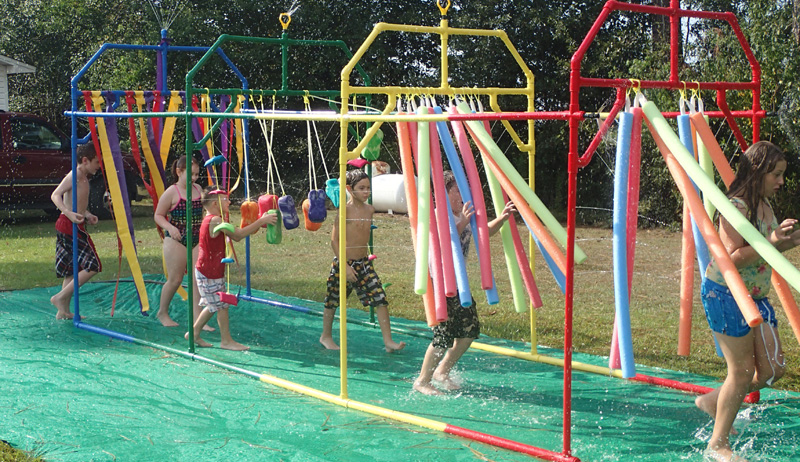
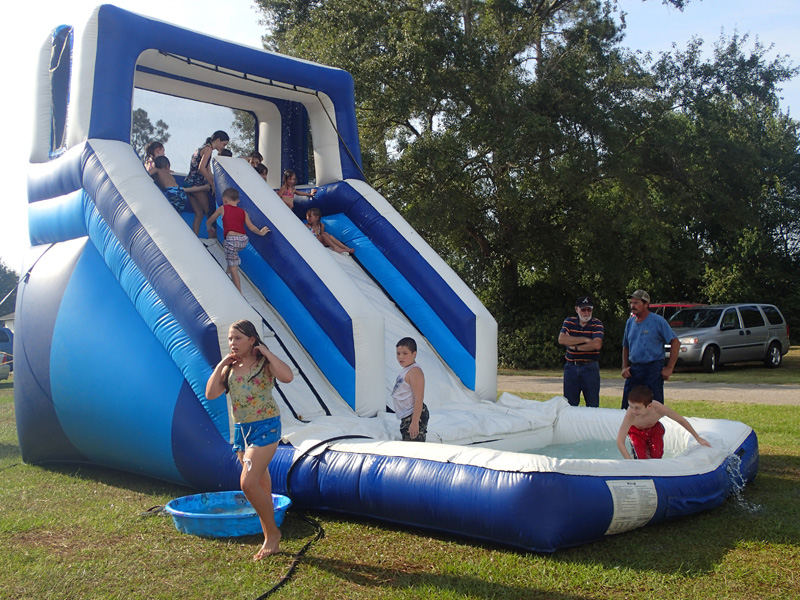
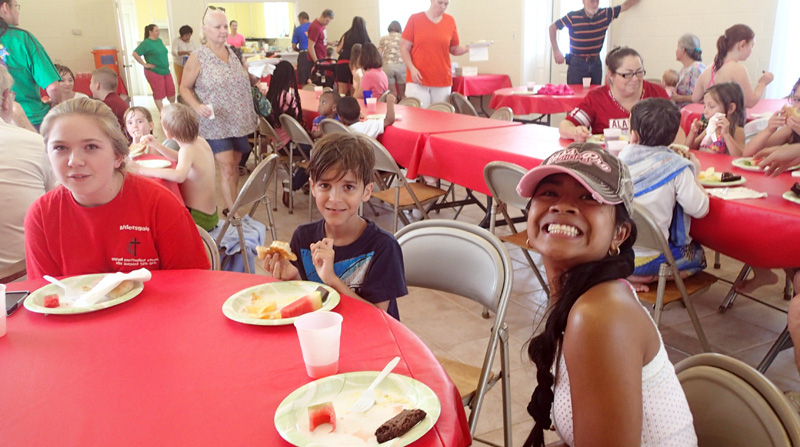
Aldersgate United Methodist Church in Molino held a Back to School Splash for the community Saturday afternoon. Everything was free, but attendees were encouraged to bring a ream or two of copy paper for Molino Park Elementary School. Photos for NorthEscambia.com, click to enlarge.
Weekend Gardening: It’s Easy To Attract Hummingbirds
September 13, 2014
by Santa Rosa County Extension
Few sights are more thrilling in the garden than rapidly moving hummingbirds darting among colorful flowers. Hummingbirds, also known as hummers, are always a wonder to see, and it’s easy to attract them to your garden.
In Florida, we see three different types of hummingbirds, but the most common is the ruby-throated. This feathered jewel is only about three inches long and weighs as little as a single penny.
For their size, hummingbirds have among the largest appetites in the bird world. They feed every 10 or 15 minutes from dawn until dusk. During this period, they eat more than half their weight in food and 8 times their weight in water.
If you’re fascinated by hummingbirds, you probably hang out a feeder or two in the summer to provide them with sugar water. Artificial feeders will attract hummingbirds.
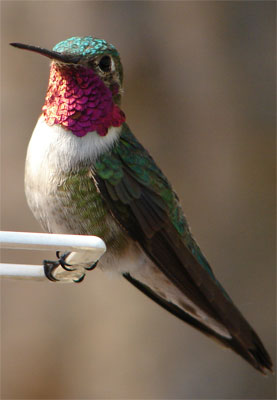 However, feeders should not be the sole source of food provided. The sugar solution may appeal to the hummingbirds’ sweet tooth, but it provides little nourishment. Nectar is much more vital to the hummingbird than just water and sugar. By planting certain flowers and shrubs, home gardeners can provide food and habitat for hummingbirds.
Typical hummingbird flowers are red, have a tubular shape and have no strong scent. But there are several notable exceptions to this general rule. Many plants with red flowers don’t contain very much nectar. Roses, petunias, geraniums and zinnias have brilliant colors but little nectar.
Plants that produce an abundance of flowers over an extended period of time and those that require little care are good choices. Native plants can “fill the bill” where nectar-seekers are concerned and should be used whenever possible.
 Perennials that are recommended as nectar sources include butterfly milkweed (Asclepias tuberosa), red basil (Calamintha coccinea), shrimp plant (Justicia brandegeana), cigar plant (Cuphea ignea), firespike (Odontonema stricta), red star hibiscus (Hibiscus coccineus), and obedient plant (Physostegia spp.).
It’s also important to plant a mixture of nectar producing trees, vines and shrubs that have overlapping blooming seasons. This will insure that a continuous source of nectar will be available to hummingbirds throughout the growing season. Some of the species recommended include red buckeye, bottlebrush, firebush (Hamelia patens), wild azalea, trumpet vine, and coral honeysuckle.
Contrary to popular belief, hummingbirds are not strictly nectar feeders. Insects and other invertebrates are the primary source of protein for adult hummingbirds and their young. An adult female can consume up to 2,000 insects per day. Small invertebrates including mosquitoes, gnats, small bees, fruit flies, spiders, caterpillars, aphids, and insects eggs make up the hummingbirds diet. So keep your plants free of pesticides. Pesticides destroy the insect food base vital to hummingbirds and their offspring, and may also contaminate the nectar they drink.
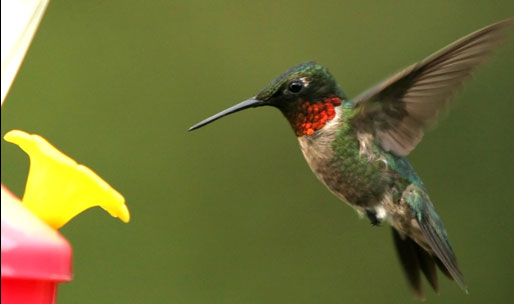 And if you do use artificial feeders, remember that the sugar solutions must be kept fresh. Florida’s hot weather can cause rapid bacterial growth in these feeders and birds that drink contaminated water could die. To avoid this, change the solution every 3 to 5 days. Clean the feeders with hot water and white vinegar. Do not use soap or chlorine bleach.
NAS Pensacola Marks 9/11
September 11, 2014


Naval Air Station Pensacola held a ceremony at the National Naval Aviation Museum Thursday to commemorate the events of September 11, 2001.
NAS Pensacola Commanding Officer Captain Keith Hoskins was the guest speaker for the event, which included the traditional “Two-Bell Ceremony” and the playing of “Taps” performed by the NASP Honor Guard.
Photos courtesy NASP, Mike O’Conner, for NorthEscambia.com, click to enlarge.


Into The Flames: Firefighters Undergo Live Fire Training
September 11, 2014
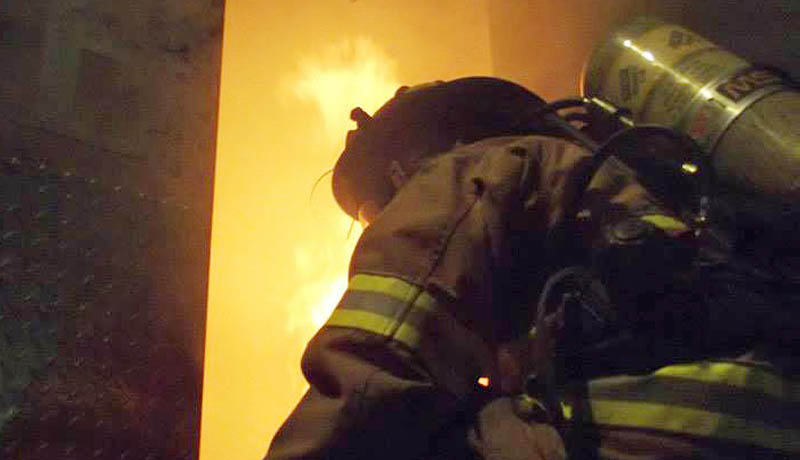
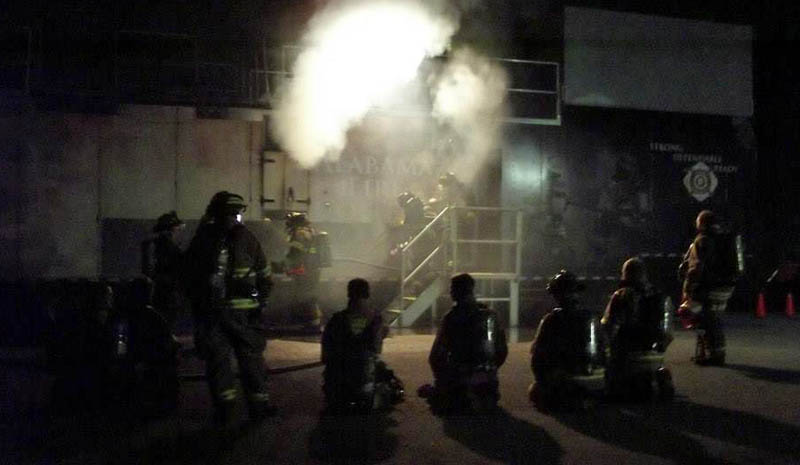
Firefighters from several area departments have received live fire training this week in the Alabama Fire College’s burn trailer at the Flomaton Fire Department. Firefighters had a chance to experience live fire in a controlled environment, practice search and rescue and safely experience a flashover effect.
Participating fire department included Flomaton, Pineview, Jay, Century and McDavid. Additional departments will undergo the training Thursday nigtt.
Pictured top: A firefighter prepares to enter a training fire Wednesday night. Pictured: Firefighters outside the Alabama Fire College’s live burn trailer. Photos by Katie Fowler for NorthEscambia.com, click to enlarge.
9/11 In His Own Words: Inside The Pentagon – Come September Morning
September 11, 2014
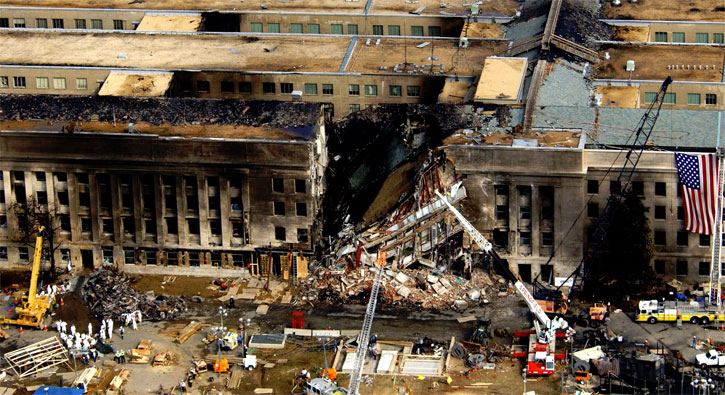
Steve Vanderwerff, who served as public affairs action officer for Naval Education and Training Command in Pensacola, was inside the Pentagon on September 11, 2001 — less than 100 yards around the corner from the crash site in his new office. Less than a week before, his office had been located in the strike zone.
Vanderwerff describes, in his own words, that September morning….
My decision to join the Navy was solely based on my sense of adventure. The Navy’s ad from my childhood, “It’s not just a job it’s an adventure,” truly struck home. I envisioned myself a bell-bottomed, Dixie-cup wearing sailor right out of the movie “Mr. Roberts.” Ah the sweet pleasure of sailing the seven seas doing the hula-hula, late night pub crawls in Hong Kong, collecting an armful of tattoos and chasing after Thai girls and beer while being paid. So I enlisted. It was 1988. All has come true except for the tattoos.
The years flew by, a tour on USS Carl Vinson – the Navy’s Golden Eagle, two tours with Pacific Fleet Combat Camera, surviving SERE School, graduating from Syracuse University’s DoD film school, a science expedition to the North Pole; and a tour with the Blue Angels as their backseat aerial photographer pulling a lot of G’s. I was operating on maximum overdrive, high on adrenaline. The ad had come true. It wasn’t just a job it was indeed an adventure. Little did I know that I had yet to experience the adventure of a lifetime, one that was life altering, made me grow-up and come to fully realize what it means to serve my country in the United States Navy.
After my tour with the Blue Angels I was detailed to the Pentagon. I had heatedly disagreed with my detailer’s decision. Taking a Secretary of Defense staff assignment at the Joint Combat Camera Center (JCCC) didn’t exactly register very high on my fun meter. Driving a desk, supporting Com Cam policy and supervising the reception of imagery from forward deployed combat camera teams isn’t exactly how I had ever envisioned myself. Damn it, I was an operator! The likelihood or remote possibility of me running into something fun and adventurous like arm-wrestling Bolivian Blow Dart Peddlers or fire walking with Tahitian Mai Tai Jugglers while stationed in DC was slim-to-none. Didn’t he have something for me, like pulling G’s in a fast-mover (I could fill volumes about how to prevent power puking inside the cockpit)? Or what about breaking through the Arctic’s polar cap in a nuclear powered fast attack submarine and standing guard against polar bear attack as I had in the past? I’m not exactly sure if a polar bear attack on a US Submariner constitutes an act of war, if so who owns the polar cap? If he wouldn’t send me to any of the above, how about something a bit more cerebral like me hitting a foreign beach armed to the teeth with Kevlar wearing Marines or maybe photographing Navy SEAL’s in revved up low-altitude fast moving helos moving in and out of hostile territory? I had always been a big fan of that sort of action. He said no to all. It was time for me to take a seat at a desk and help others do what I wanted to do.
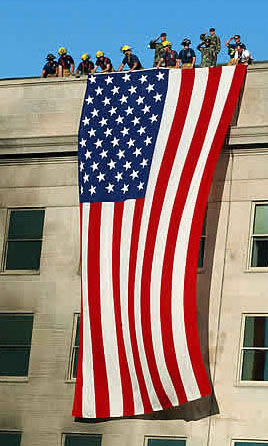 And so on a hot muggy day I checked in. It was August 2001. The Pentagon buzzed like a beehive. I was impressed by all of military’s, “Heavy Hitters” that walked the halls. There was a lot to learn, especially working with the other service branches. What was there not to like? The world appeared to be at peace. I was stationed in our nation’s capitol. I had a large cubicle, and my own computer with super fast T-line connections. A Starbucks was conveniently located one floor below. Best of all, I would be home every night for the next three years to annoy my wife and kids. My first month flew by moving JCCC into the Pentagon’s newly renovated wing.
On a sunny, Tuesday morning I arrived at work. It was September 11, 2001. It was a little after nine a.m. when I got to work. My wife Dayle, was flying back home that day from attending a funeral in the mid-west. I was getting in late because I had to drop my kids off at school; playing the role of soccer mom somewhat new to me. My officer in charge was attending a conference in Norfolk, Va. and my operations chief was at a meeting down the road in Alexandria. When I got to the office everybody was huddled around the TV. The news was reporting that a plane had crashed into one of New York’s Twin Towers.
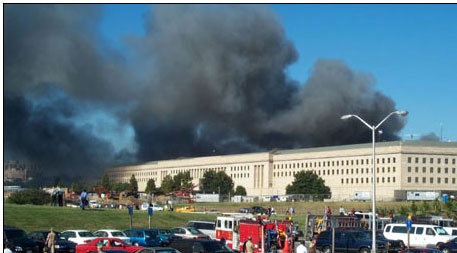
I stood flabbergasted as the tragedy unfolded. To my disbelief a second jet slammed into the Twin Towers. My memory is a bit fuzzy of what happened next, but as I recall, soon afterwards the Pentagon shuddered and shook. My co-workers and I looked at each other not sure of what had just happened. That sure seemed like one helluva sonic-boom I thought to myself. Having come from the “Blues” my mind still operated in the aviation world of thinking. The phone rang. I answered it. It was one of my guys who, was off for the day at home just across the Anacostia River at Bolling Air Force Base. He asked me if we had just been attacked. I said “is that what that was?” I said I wasn’t sure, there were no alarms going off. He said he thought so because looking from his back yard black smoke was pouring out of the Pentagon. Someone went out to investigate. They quickly came back. All they said was, “We gotta go.”
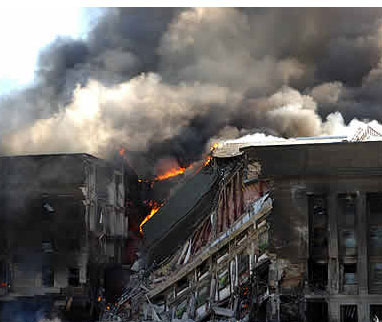 Smoke filled halls were filled with people making their way towards exits. The murmur of voices and shuffling feet was all that could be heard. No one had a clue to what had just happened. The idea of a passenger plane hijacked by terrorists and crashing into the Pentagon was as remote a possibility as Arnold Schwarzenegger becoming the governor of California. Not exactly knowing what to think I made my way outside. Once outside I saw thick black smoke rising from the building. I thought that maybe construction workers working on the renovation might have hit a gas main. All sorts of thoughts ran through my head as hordes of dazed and confused people continued to pour into the daylight. Seeking information I went to my car and turned on the radio to listen to the news. I sat stunned not believing what I was hearing. Holy-moley I thought. We’ve been attacked by terrorists, same as the Twin Towers. My God there are people in the wreckage. I spend my entire career trying to get into the action and when I think that I’m away in the rear the action comes looking for me. I heard approaching sirens in the distance. Then it dawned on me. My wife was flying home that day. My mind raced with morbid fear. Is she safe? Has she got on the plane yet? In a fog I made my way to the pre-determined rally point. Once there I set my personal emotions aside. I had people to muster and account for. The rest of JCCC showed up. All were accounted for. Then security officers were yelling for everybody to leave the area because another attack was imminent. Mass hysteria hit the crowd. What the heck was going on? Like cockroaches scattering when the lights come on, civilians, military personnel, politicians and bungling bureaucrats ran for cover. Somehow we all ended up on the other side of Highway 395. I knew I wouldn’t be seeing my car for a long time. More worries filled my mind, thinking of how would I get home and who would pick-up and care for my kids? The second attack turned out to be a false alarm. I set aside my worries, I focused on the positive. My wife would be ok and I would figure out how to get home and take care of my children, but first I had my duty to fulfill. Once again I accounted for my personnel.
 Fortunately several members had grabbed their cell phones. The airways were jammed, but after repeated attempts we were able to get a hold of my boss. He instructed us to get to the American Forces Information Services (AFIS) in Alexandria, where he currently was and where we would set up shop. There was imagery to get out to the world. The story needed to be told. Because none of us had access to our cars we made our way to the nearest metro station. I tried repeatedly, but couldn’t reach my wife. I was scared. Fortunately I was able to contact a neighbor who would pick my kids up from school. Once at AFIS we went into action setting up a temporary JCCC – still and video imagery started to come in. Sec Def wanted his imagery. Hours later after repeated attempts I finally was able to get a hold of my wife. She was safe. Her plane had been delayed because of the tragedy. She had spent her time desperately trying to get a hold of me, fearing for the worst – widow hood. I assured that her I was un-harmed and that the kids were safe with a neighbor. We cried for our good fortune and the mis-fortune of others. I thanked God for watching over me and my family. I had been less than a hundred yards around the corner from the crash site. Late that night in the safety of my home with my kids snug in bed I realized that a week earlier before moving into the newly renovated wing, JCCC had been located in the area of impact and that a few of my office mates and I would have been in the old office that morning to make sure we had moved everything, but had not because we had been watching the Twin Towers tragedy on TV. I sighed with relief. It had been a close call.
Years later, thinking about that bleak morning in September when all of America held its breath and our enemies cheered I give pause to reflect. Understanding, that on that day something awoke in me that had been missing in me, if not many others – service and sacrifice. I had spent my time in the Navy up until then thinking of what I could take or get out of the deal. My training, my many deployments, my wanting fun and adventure had always been about me. Sure, I had always been a good Sailor, but I had been driven by hubris and selfish desire. Not giving much thought to what it meant to serve my country. I was happy as long as I was able to collect a paycheck.
It didn’t happen overnight, but over the course of my tour at the Pentagon and supporting the “Global War on Terror” I found a new sense of purpose and energy. I worked long hours, determined to support the cause and give meaning to my duty. Gone were my days of thinking that being a Sailor meant being a sea going pirate, swashbuckling across the globe, with tales to spin and tell. People had died and would continue to do so without mine and every American’s full support to stop our enemies.
So when it was time for me to talk to my detailer about orders, I didn’t hesitate to ask for orders at the “tip of the spear” aboard a ship because that was where I was needed. My days of asking for fun and adventurous jobs seeking personal reward and glamour were over.
And so whenever I found myself on long arduous extended deployments while sailing in harms-way wondering why I had to be there and for what purpose I would think of all those who had gone before me and of their sacrifice and dedication to service.
I continued to serve with that sense of pride and purpose at follow-on duty stations, and continue to do so as a retired chief and civilian employee at Naval Education and Training Command, which develops the Navy’s workforce through education and training that builds personal, professional, and leadership skills.
When my time in the Navy, active duty and as a civilian, comes to a close I will be proud to say as President Kennedy so eloquently put,
“I can imagine no more rewarding a career. And any man who may be asked in this century what he did to make his life worthwhile, I think can respond with a good deal of pride and satisfaction:
“I served in the United States Navy”
Our View: Where Were You That September Morning?
September 11, 2014
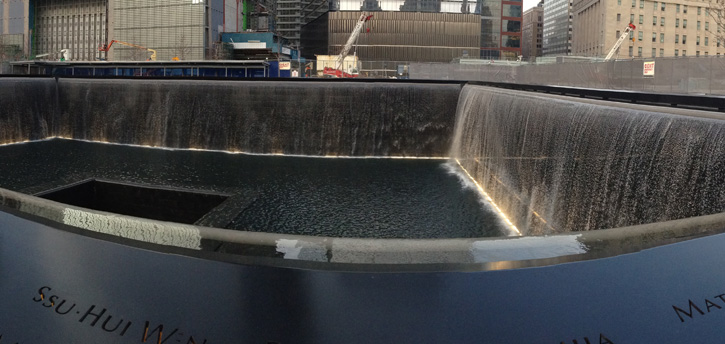

September 11, 2001. It’s been 13 years.
Life, at least when that morning began, seemed good. I’ve always been a work at home dad, so I was home with my two girls. The youngest was almost four months old, and the oldest was approaching her fourth birthday. It was a normal morning. The little one was asleep, “fat and happy” as we used to say, after a morning bottle. The oldest was in the living room just a few feet from my office watching PBS Kids on the TV as I worked on a project for a client.
Then this arrived in my inbox:
Subject: CNN Breaking News
From: BreakingNews@CNN.COM
Date: Tue, 11 Sep 2001 08:52am– World trade center damaged; unconfirmed reports say a plane has
crashed into tower. Details to come.
I got up, walked to the living room and flipped the TV to CNN. They were talking about how a pilot could make such an error, hitting such a large building. They were speculating that it was just a small plane. But then as the TV news helicopters zoomed their cameras in closer, the anchors were beginning to notice what I had already thought….those holes the tower were to big to have been a small plane.
(continues below photo)
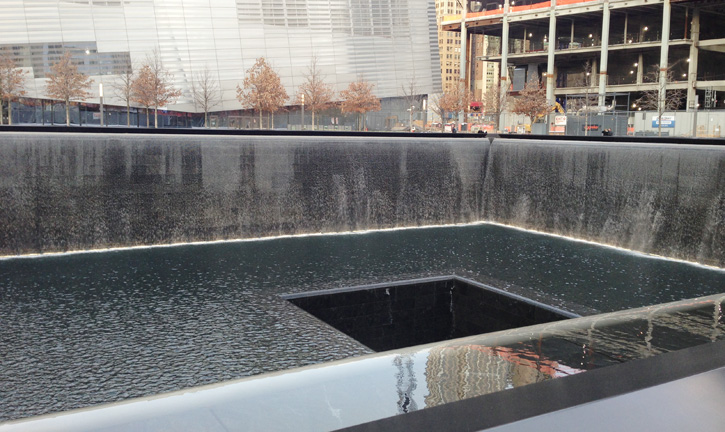 I called my wife at work in Atmore. She had seen the breaking news email, and had tried to visit the CNN website to see the story. If you remember trying to use the internet that morning, it was near impossible to get a news website to load; they were all overloaded. She was unable to see the pictures. I was describing what I saw on the TV to her.
I managed to grab a picture from CNN via my web server and then download and email it to her. We were speculating about how it could happen when the second one hit.
I remember saying “wait, hold on, wait…”. I told her what I just watched on the TV. The second plane had hit the other tower. We quickly decided that we were at war as the anchors on TV speculated again that perhaps there was a problem with some navigational system, causing jetliners on a beautiful, clear morning in New York to fly into some of the tallest structures in the world.
Another breaking news email arrived:
Subject: CNN Breaking News
From: BreakingNews@CNN.COM
Date: Tue, 11 Sep 2001 09:21am– Second plane crashes into World Trade Center.
She and I began to speculate ourselves that we were at war. What would we do? What should we do? What about the kids? It was not panic, understand, but just that protective momma and daddy instinct, I suppose. Prayer. That was a good idea. Maybe go to the bank and get out a little cash. That seemed like a good idea. How would you prep for a war on American soil? We were not sure.
I continued to relay information about what I was seeing on TV to my wife at work, who, in turn, would relay the information to her coworkers. They had a TV, but no cable service or antenna. They ended up fashioning a homemade antenna to see a fuzzy picture.
Meanwhile, the breaking news emails kept arriving…
Subject: CNN Breaking News
From: BreakingNews@CNN.COM
Date: Tue, 11 Sep 2001 09:32am– Sources tell CNN one of two planes that crashed into World Trade
Center was an American Airlines 767.
Subject: CNN Breaking News
From: BreakingNews@CNN.COM
Date: Tue, 11 Sep 2001 09:42am– President Bush calls plane crashes at World Trade Center a
terrorist act.
Subject: CNN Breaking News
From: BreakingNews@CNN.COM
Date: Tue, 11 Sep 2001 09:45am– Significant fire at the Pentagon. Details to come.
Subject: CNN Breaking News
From: BreakingNews@CNN.COM
Date: Tue, 11 Sep 2001 09:46am– White House evactuated. Details to come.
The Pentagon on fire? The White House evacuated? Notice that in CNN’s email they were in such a hurry that they misspelled “evacuated”. One sentence at a time, the situation became more grave.
Subject: CNN Breaking News
From: BreakingNews@CNN.COM
Date: Tue, 11 Sep 2001 09:55am– CNN confirms a plane hit the Pentagon
Subject: CNN Breaking News
From: BreakingNews@CNN.COM
Date: Tue, 11 Sep 2001 10:03am– One of World Trade Center towers collapses; fire forces
evacuation of State Department
Subject: CNN Breaking News
From: BreakingNews@CNN.COM
Date: Tue, 11 Sep 2001 10:30am– Second World Trade Center tower collapses in Manhattan
Over and over, we watched those towers collapse on TV, and we watched our Pentagon burn.
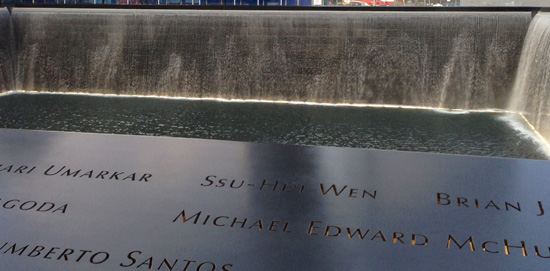 Our almost four year old asked a lot of questions. “Were people hurt? Did they need a Band-aid?” The magnitude of the event was lost on a four year old. Looking back at those first few hours, I think the magnitude of the event was lost on all of us.
Like many Americans, I sat glued to the TV that day, continuing to watch the video of the towers falling. Our almost four year old asked if another building fell down or if it was the same one. It was time to change the channel on the TV.
You might remember that many of the entertainment TV stations ran network news feeds. Others just simply ran screens about the day’s events. There was no USA network, no ESPN, no MTV. But on PBS, we found children’s programming at a time it was not normally on. For a little while, sitting in the living room floor holding my kids, the world stopped turning that September day, as we watched Big Bird and the Cookie Monster.
Country artist Alan Jackson later wrote a song “Where Were You When the World Stopped Turning?”.
Some of those lyrics:
Where were you when the world stopped turning that September day
Out in the yard with your wife and children
Working on some stage in LA
Did you stand there in shock at the site of
That black smoke rising against that blue sky
Did you shout out in anger
In fear for your neighbor
Or did you just sit down and cryDid you weep for the children
Who lost their dear loved ones
And pray for the ones who don’t know
Did you rejoice for the people who walked from the rubble
And sob for the ones left belowBut I know Jesus and I talk to God
And I remember this from when I was young
Faith hope and love are some good things He gave us
And the greatest is love
Where where you when the world stopped turning that September day? Your comments are welcome below.
NorthEscambia.com photos by Bethany Reynolds, click to enlarge.
Escambia 4-H Horse Club Lending A Hand To The Leaning Post Ranch
September 10, 2014
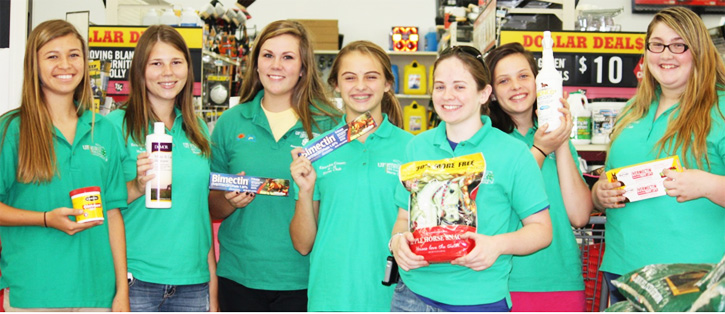
The Escambia County 4-H Horse Club is working this month to assist the Leaning Post Ranch in Molino with needed supplies while learning about the services the ranch offers to the community. The Leaning Post Ranch’s mission is provide equine assisted activities and therapeutic riding to individuals with disabilities and at-risk youth in Northwest Florida –offering health, hope, and healing through horses. Submitted photo for NorthEscambia.com, click to enlarge.