

Former Atmore Police Chief, Emergency Director Passes Away; Former Pensacola Chief Dies
March 30, 2011
A former Atmore Police chief and Escambia County (Ala.) Emergency Management director has passed away, and a retired Pensacola Police Chief has also died.
William Edward “Bill” Smith, Escambia, Alabama
William Edward “Bill” Smith, 68, died Sunday at his residence. Smith served as Atmore Police chief for many years in late 1970’s into the 1980’s before becoming Escambia County EMA director.
Funeral services for William Edward “Bill” Smith will be held today at 10 a.m. at the Atmore Memorial Chapel Funeral Home with Bro. Robert Thower officiating. Interment will follow in Oak Hill Cemetery.
For the complete obituary, click here.
Drexel P. Caldwell, Pensacola
The Pensacola Police Department’s oldest living retired Chief of Police has died.
Drexel P. Caldwell died Monday in Pensacola. He was 96.
“Chief Caldwell was instrumental in transitioning the Pensacola Police Department into the professional organization it is today,” said Chief Chip W. Simmons. “He was a life-long public servant the Pensacola Police Department was honored to have as one of its leaders.”
D.P. Caldwell, as he was known, was hired by the department as a police officer on May 4, 1946. He was promoted to Chief in 1962 and served the community in that capacity until he retired July 12, 1974.
He then served as a narcotics investigator for the State Attorney’s Office from 1976 – 1978. Part of his responsibilities in that job were to command a narcotics task force for the First Judicial Circuit, said his son David Caldwell.
Chief Caldwell was credited with organizing the first local police academy and with giving more attention to safety and crime prevention programs. He also was interested in the department sponsoring Scout troops, the police athletic league and school boy patrol programs.
David Caldwell said his father served in the U.S. Army from 1935 – 1938 and then was a lieutenant/security officer during World War II at the main gate to the Pensacola Naval Air Station. He worked at NAS from 1942 – 1946 when he was hired by the Pensacola Police Department.
Among his survivors are his wife of 72 years, Gladys Caldwell; three sons and one daughter.
Visitation will be from 9 to 11 a.m. Thursday (March 31) at Pensacola Baptist Temple, 5000 Cerny Road, located at the corner of Muldoon and Cerny roads. The funeral service will begin at 11 a.m. Thursday at the church with burial following at Bayview Cemetery.
In lieu of flowers, donations can be made to the Pensacola Baptist Temple Mission Board.
Health Care Opt Out Advances
March 30, 2011
Moving toward a 2012 ballot fight, a House subcommittee on Tuesday approved a proposed constitutional amendment that might allow Floridians to opt out of a key part of the federal health overhaul.
The House Health & Human Services Quality Subcommittee voted 10-4 along party lines to approve House Joint Resolution 1. The full Senate has already passed its version of the measure.
The proposed amendment says, in part, that “a law or rule may not compel, directly or indirectly, any person or employer to purchase, obtain, or otherwise provide for health care coverage.”
Supporters hope that would allow Floridians to opt out of what is known as the “individual mandate” — part of the Patient Protection and Affordable Care Act that eventually will require almost all Americans to have health insurance.
The Florida Supreme Court rejected a similar proposed amendment last year because of misleading ballot wording. Sponsors removed the disputed wording from the new version and want to ask for voter approval in November 2012.
Sponsor Scott Plakon, R-Longwood, told the subcommittee that the individual mandate is “against what our country was founded on.”
But Democrats have long contended that Floridians can’t opt out of the federal health law because of the Supremacy Clause of the U.S. Constitution. Rep. Mark Pafford, D-West Palm Beach, said he thinks the proposed amendment “frankly is philosophical rambling.”
Body Found In Bayou Chico Is Former Atmore Resident
March 30, 2011
A body found in Bayou Chico Tuesday night has been identified as John Hawkins, an Atmore native who jumped from a sailboat Monday night.
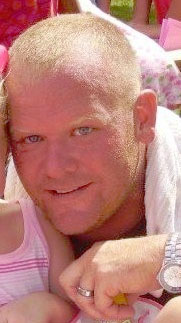 Thomas Hawkins IV, 35, is a resident of Orange Beach, but family members say his is originally from Atmore. Pensacola Police said an autopsy will be done to determine cause of death.
A man called 911 around 7:15 Tuesday night after finding Hawkins in Bayou Chico, said Sgt. Stephen Davis.
Pensacola Police were initially dispatched to the Pensacola Shipyard area, 700 S. Myrick St., around 7:25 p.m. Monday after receiving a call that Hawkins had jumped into the water and could not be found.
Hawkins and his wife Angela, also 35, had been staying on a friend’s docked sailboat. Angela Hawkins told police she and her husband had been swimming all day and that her husband had been drinking. She said she was near the rear of the boat when she heard her husband, who is a good swimmer, jump from the front.
After about 10 to 15 minutes, Angela Hawkins said she began looking for her husband but couldn’t find him. At that point, she notified a security guard and when they still could not locate him, police were called.
Differences Emerge On Florida Budget As Plans Move Toward Votes
March 29, 2011
With the House and Senate both preparing to vote on plans to close a $3.75 billion budget shortfall by the end of this week, attention was quickly turning to differences the two chambers would have to negotiate when conference committees start meeting next month.
Grabbing much of the attention Tuesday was a proposal in the Senate to save tens of millions of dollars with a broad prison privatization push that would include prisons across essentially the southern third of the state. The House proposal is more modest, privatizing prisons in Broward and Miami-Dade counties.
Senate Budget Chairman J.D. Alexander, R-Lake Wales, said the proposal could save as much as $70 million. But Senate Democratic Leader Nan Rich, D-Weston, criticized the method of pushing the proposal through.
“I think it’s particularly egregious when you put something into a budget and don’t give people the opportunity to have a substantive discussion in a committee about the issue,” Rich said Tuesday.
“Anything that has that kind of price tag is subject to being considered by the budget committee,” Alexander said.
Rep. Rich Glorioso, the Plant City Republican who oversees the House corrections budget, said his chamber would likely be open to a wider privatization plan.
“We’re open to good, solid decision-making with privatization,” Glorioso said. “If it can be done cheaper and safe and more efficient, it makes sense. The key is, ‘as safe.’”
Also on the table:
A Senate proposal to privatize prison medical services statewide. The upper chamber included that plan, and $75 million in savings from it. Glorioso said he was open to the notion.
The difference between the two chambers on K-12 education is relatively modest. The per-student spending in the Senate plan would come in at $6,388, a drop of 6.2 percent from last year. The House wants to spend $6,349 per student, a 6.8 percent cut.
Though that’s the lowest in per-student funding in many years, lawmakers cautioned that the numbers are skewed because of the assumed impact of requiring employees to contribute toward the Florida Retirement System, essentially taking that amount of pensions spending off the books.
Both budgets cut programs dealing with mentorship, teacher training and awards and public broadcasting, but neither is as stringent as Scott’s proposed education budget, which included a 10 percent cut in education funding.
The plans do differ significantly in their treatment of new construction projects in the state university system.
The Senate budget provided funding for eight new construction projects across the state university system, from a physics classroom building that would cost $7.8 million at The University of Central Florida, to a new school of pharmacy at the University of South Florida with a price tag of $10 million.
In total, the Senate wants to restore $80 million for new construction projects. These projects were approved by the Legislature last year but vetoed by former Gov. Charlie Crist. The House does not include funding for new construction, only $44.8 million for repairs and maintenance.
The Senate includes a similar amount for repairs and maintenance, plus the money for new construction. In a letter to the State University System Board of Governors, Chancellor Frank Brogan said “at a time when funding is particularly scarce,” the system was gratified to receive money for repairs and new construction.
The proposals also include wide differences in health and human services.
Overall, the House would spend $29.2 billion in the six agencies included in the health- and human-services budget, about $800 million more than the Senate proposal.
Both proposals would rely heavily on cutting hospital and nursing-home Medicaid rates to balance the budgets. For example, the Senate would cut hospital rates by about $438 million, while the House would reduce them about $298 million.
The Senate also plans to dramatically shrink the Medically Needy program, which provides care for people who have catastrophic illnesses but do not meet the regular qualifications for Medicaid.
The Senate would stop paying hospital and drug costs for medically needy patients in April 2012, though it would continue paying for physician services. That move would save about $230 million next fiscal year.
In another major difference, the House would eliminate $50 million for biomedical research conducted at the H. Lee Moffitt Cancer Center in Tampa and other facilities. The Senate would continue funding the research, though it would change how the money is distributed.
And one of the usual differences is back, with the House proposing to raid the State Transportation Trust Fund for $330 million.
House Transportation and Economic Development Subcommittee Chairman Mike Horner has said that the sweep is in line with Gov. Rick Scott’s recommendations for transportation funding, but conceded it would still trigger some delays in the Department of Transportation’s five-year work plan.
The Senate has long featured bipartisan support for maintaining transportation funding, contending that it creates jobs. Both Rich and Alexander said Tuesday they oppose sweeping the fund, though the budget chairman refused to rule out being forced to do so in conference.
“I don’t want to,” he said. “I think it’s a terrible policy.”
By Brandon Larrabee and Lilly Rockwell
The News Service of Florida
Cantonment Area Growth Will Lead To Redraw Of Escambia Districts
March 29, 2011
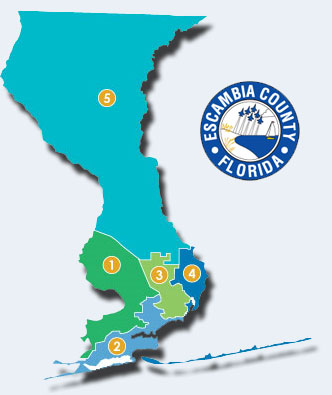
Following recent release of 2010 Census numbers that show a population shift into the Cantonment area of the county, both the Escambia County Commission and the School District will sit down in May to redraw district boundaries.
Escambia County is divided into five different voting districts, each represented by a county commissioner and school board member.
According to County Administrator Randy Oliver, the districts must be redrawn in such a manner that the population difference between the smallest district and the largest district is no more than five-percent.
“We will sit down with the school board in an effort to make sure everyone is in the same commission and school district,” Oliver said.
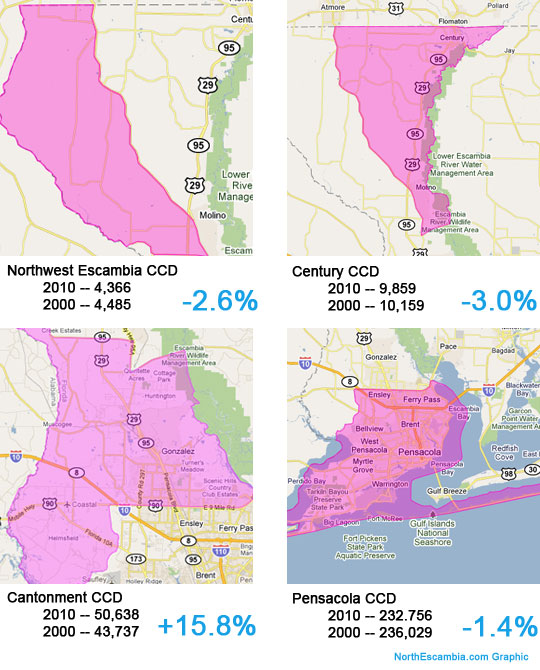
Data released last week by the U.S. Census Bureau showed a population shift into the area between Barrineau Park and 9 Mile roads. That area, called the Cantonment Census County Division, saw a population increase of 15.8% (6,901 people) while the other three division in the county saw a population decrease of 1.4 to 3 percent. Overall, the county experienced a very slight 1 percent increase during the decade as the population increased from 294,410 in 2000 to 297,619 in 2010.
Below: This graphic shows the 10-year population change in four Census County Divisions in Escambia County.
Sheriff’s Copter Flies Again
March 29, 2011

The Escambia County Sheriff’s Office helicopter returned to the air on a limited basis beginning Tuesday, according to Sheriff David Morgan.
Morgan grounded the Sheriff’s helicopter unit in February, 2009 citing the $800,000 annual price tag as being cost prohibitive, but now the department has received a grant that will allow the helicopter to respond to violent felonies and life threatening situations.
“We were able to obtain limited funding in the form of a grant that will allow us to use the helicopter to assist in our efforts to reduce violent crimes,” said Sheriff’s spokesperson Deputy Chris Welborn. “The helicopter crew will be available for call out, but only for the most serious situations.”
In the past, the helicopter was very effective in locating criminals on the run, lost children and elderly adults and drowning victims, he said.
“The helicopter is an effective tool, and as long as grant funding is available we will continue to use the helicopter on a limited basis,” Morgan said.
Pictured: This file photo shows the Escambia County Sheriff’s Office helicopter in operation prior to being grounded two years ago.
Convicted Sex Offender Busted
March 29, 2011
A convicted Alabama sex offender that was supposed to living in Flomaton has been arrested after deputies found him living at an address in Canoe, Alabama.
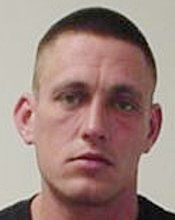 Escambia County (Ala.) Sheriff’s Department deputies found Marvin Earl Kimmons III, 32, living in the 400 block of Canoe Road – not far from Escambia Academy. Kimmons told authorities in January of this year that he was living at 543 Hollywood Drive in Flomaton, according to the Alabama Department of Public Safety.
Kimmons was also charged with possession of a controlled substance and conspiracy to commit a controlled substance crime.
Under Alabama law, sex offenders such as Kimmons are required to notify the state of their latest address at all times. Kimmons was convicted in 2002 of raping a 12-year old female, according to the Alabama Department of Public Safety.
FHSAA Announces New Districts For Cross Country, Golf, Weightlifting
March 29, 2011
Monday, the Florida High School Athletic Association announced new classifications and district assignments in cross country, golf and girls weightlifting for the 2011-12 and 2012-13 school years.
Schools have until April 18 to appeal their classifications before they become final.
The new classifications are (with the immediate North Escambia area schools in bold):
–CROSS COUNTRY–
Class 3A
Region 1 District 1
Choctawhatchee (Fort Walton Beach)
Crestview
Escambia (Pensacola)
Fort Walton Beach
Gulf Breeze
Milton
Mosley (Lynn Haven)
Navarre
Niceville
Pace
Pensacola
Pine Forest (Pensacola)
Tate (Cantonment)
Washington (Pensacola)
Class 2A
Region 1 District 1
Northview (Bratt)
Pensacola Catholic
West Florida (Pensacola)
Arnold (Panama City Beach)
Bay (Panama City)
Marianna
Rutherford (Springfield)
South Walton (Santa Rosa Beach)
Walton (DeFuniak Springs)
Class 1A
Region 1 District 1
Baker
Central (Milton)
Freeport
Jay
Laurel Hill
Paxton
Pensacola Christian
Rocky Bayou Christian (Niceville)
–GIRLS WEIGHTLIFTING–
Single Class
District 1
Baker
Choctawhatchee (Fort Walton Beach)
Crestview
Escambia (Pensacola)
Fort Walton Beach
Freeport – X
Gulf Breeze
Jay
Milton
Navarre
Niceville
Northview (Bratt)
Pace
Pensacola
Pine Forest (Pensacola)
South Walton (Santa Rosa Beach)
Tate (Gonzalez)
Walton (DeFuniak Springs)
Washington (Pensacola)
West Florida (Pensacola)
– BOYS AND GIRLS GOLF –
Class 2A
Region 1 District 1
Choctawhatchee (Fort Walton Beach)
Crestview
Escambia (Pensacola)
Fort Walton Beach
Gulf Breeze
Milton
Navarre
Niceville
Pace
Pensacola
Pine Forest (Pensacola)
Tate (Cantonment)
Washington (Pensacola)
Class 1A
Region 1 District 1
Central (Milton) [boys only]
Freeport
Northview (Bratt) [boys only]
Pensacola Catholic
Rocky Bayou Christian (Niceville) [boys only]
South Walton (Santa Rosa Beach)
Walton (DeFuniak Springs)
West Florida (Pensacola)
More Federal Charges Against Tax Preparer In 99-Count Indictment
March 29, 2011
 A federal grand jury has returned a third indictment against a former Alabama tax preparer, adding 19 more criminal counts against her.
Alice Mobley now faces a 99-count indictment of conspiracy, preparing and filing false tax returns, mortgage fraud, and wire fraud. The new indictment added a dozen additional counts of aggravated identity theft around four additional counts of filing false tax returns.
Mobley’s charges stem from alleged false tax returns filed from 2007 to 2009 through her business Preyear Tax and Check Cashing, LLC, located in Monroeville and its offices in Atmore and Thomasville.
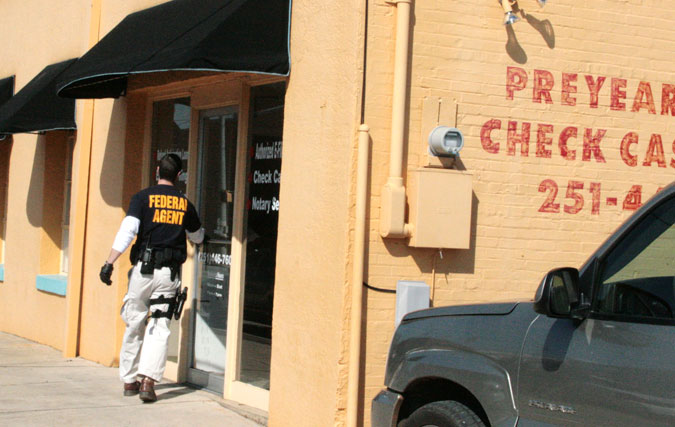
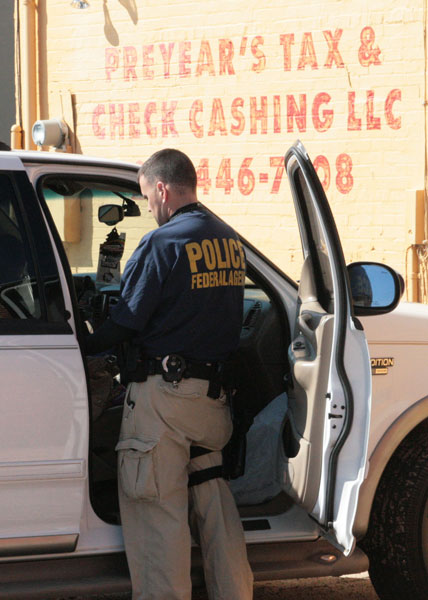
Federal agents raided Mobley’s Preyear’s Tax & Check Cashing, LLC on Ridgely Street in Atmore and other locations in March, 2010. Federal court documents show that FBI and IRS agents seized over $300,000, boxes of tax documents, computers, vehicles and even a stuffed teddy bear when they raided the businesses and Mobley’s Monroeville home.
Mobley’s scheme filed tax returns claiming some $68 million in tax refunds, largely for Earned Income Credit and other tax credits, according to the Department of Justice. Mobley would falsely claim various dependent credits, either charged her clients an extra fee for the using the false dependents or pocketing the extra funds herself.
Mobley also “split” dependents, using the identity of some children on one return to obtain Earned Income Credit, and on other returns to obtain Child Credit and Dependent Care Credit. Mobley’s firm also prepared returns which claimed business tax deductions for business which did not exist and farm tax deductions for clients who did not have farms, the DOJ said.
Mobley was also charged with mortgage fraud and wire fraud in connection with fraud in regard to applications she made for mortgages to CitiBank and Wells Fargo.
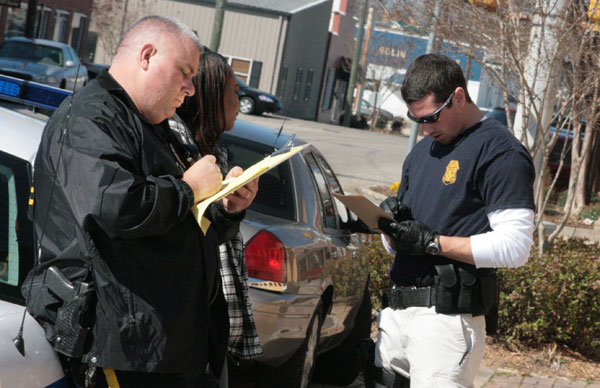
Pictured above: A federal agent enters Preyear’s Tax & Check Cashing, LLC in Atmore March 4, 2010. Pictured inset: Agents search a vehicle at the business. Pictured below: A federal agent and Atmore Police officer talk to an employee of the business during the raid. NorthEscambia.com file photos, click to enlarge.
Docs, Gun Groups Compromise On Evers Gun Bill
March 29, 2011
Doctors would still be able to ask patients questions about whether they have guns in many cases under a measure approved by a Senate committee on Monday, a result of a compromise between gun rights groups and the medical establishment on a bill sponsored by Sen. Greg Evers.
 The National Rifle Association and other gun rights groups had pushed for a much stronger bill that would have precluded doctors in many cases from asking patients about whether they own guns. Backers of the measure had said patients were being harassed over gun ownership.
But citing the confidentiality of what is said between doctors and patients, and a broader desire to protect other members of patients’ families, doctors had pushed back hard against the bill (SB 432). The issue had promised a fight between two of the most powerful lobbies at the Florida Capitol.
But an amendment adopted before the committee’s vote on Monday would now generally allow doctors to ask questions about gun ownership, as long as the physician doesn’t “harass” the patient, and doesn’t enter the information into the patient’s record without a good reason. That leaves enough room that doctors now support the measure, as does the NRA.
“We have an agreed-to, good bill here,” said Evers.
While the committee advanced the bill, four members, two Republicans and two Democrats, said they still were uncomfortable with anything that would give doctors pause about asking questions about safety issues, and voted against it.
“I am concerned this degrades and diminishes the doctor-patient relationship,” said Sen. Eleanor Sobel, D-Hollywood. “A doctor should ask about safety in the home whether it’s pool safety, helmet safety or gun safety.”
Sen. Mike Bennett said his opposition was personal – because of his own experience as a child with a father who “chased his wife around” the House with a gun.
“I’ve been there, done that,” said Bennett, R-Bradenton.
“What about the patients’ children? What about the patient’s wife getting a beating every Saturday night?” Bennett asked.
Evers said the new version of the legislation would take care of that concern – allowing doctors to ask questions now, if they feel there’s a valid reason.
“There has to be a justification (however),” said the sponsor of the compromise amendment, Sen. Thad Altman, R-Viera. “The doctor can’t do it arbitrarily.”
The bill also no longer carries any civil or criminal penalties, leaving it up to professional medical boards to police the requirement.
The compromise appeared necessary to get the proposal moving – the bill had been stalled in the Health Regulation Committee for more than two weeks, and even some who voted for it on Monday expressed some skepticism.
The bill still has two more committee stops in the Senate, but Evers gave the panel his commitment that only minor changes would be made in those committees, and that the bill wouldn’t revert to its former form. A similar House bill (HB 155) still has two committee stops there.
By David Royse
The News Service of Florida