

Florida Gov’t Weekly Roundup: FAMU, Scandal, Voters And Drugs
July 14, 2012
Fireworks hit the capital city the week after the Fourth of July, with sparks flying over the resignation of a besieged university president, allegations of inappropriate behavior in the lieutenant governor’s office and a high-profile court case upholding a tough Florida drug law.
Lawmakers from both sides of the aisle filed a flurry of financial disclosures, giving the public a good first look at campaign contributions following the redrawing of political boundaries.
 Gov. Rick Scott spent the week at the Farnborough International Air Show in London, flying the Florida flag as he met with aviation executives and tourism officials as part of his continuing mission to attract businesses and tourists to the state and bring jobs, jobs, and jobs.
FAMU’S AMMONS LATEST TO GO DOWN FOLLOWING HAZING DEATH
Florida A&M University President James Ammons was the latest school official to pay a price for the November hazing death of “Marching 100″ drum major Robert Champion.
Ammons, who makes upwards of $325,000 a year, resigned mid-week amid continuing fallout from Champion’s death and a lingering list of other concerns at the historically black university ranging from poor student-retention rates and sexual abuse to budget deficits and accounting fraud.
Ammon’s resignation came a month after receiving a vote of no-confidence from the FAMU Board of Trustees and nearly eight months after Champion’s death. The resignation was tendered the same day Champion’s family filed a lawsuit in Orlando against FAMU and the company that operated the charter bus in which the hazing allegedly occurred.
Ammons said he would stay as president until Oct. 11 and remain on campus after that time as tenured professor. Trustees will meet Monday by telephone to discuss his resignation.
Champion died on a charter bus in November after the university’s renowned marching band performed at the annual Florida Classic football game in Orlando. Thirteen band members have been charged in Champion’s death. Of those, 11 face felony hazing charges and could face up to six years in prison. Two others were charged with misdemeanors.
While the hazing case has drawn national attention, some university-system officials have been as troubled by other issues, including allegations of fraud involving summaries of an audit that hadn’t actually been done and a sexual assault of a minor at FAMU’s research school.
“This is not about hazing, this is about leadership or lack of leadership at FAMU,” said Trustee Rufus Montgomery. “There have been over 30 serious issues over the past year that have come before this board ….This all came under the watch of the current president. For the last seven months we’ve danced around it week after week, problem after problem….”
LAWSUIT: CARROLL CAUGHT IN COMPROMISING POSITION:
Controversy swirled within Lt. Gov. Jennifer Carroll’s office this week as a former aide said she caught Carroll in “a compromising position” with another aide shortly before getting fired.
Former aide Carletha Cole, who faces criminal charges for sharing a recorded conversation of Carroll’s chief of staff with a reporter for The Florida Times-Union, made the accusations of sexual impropriety as part of her defense. The allegations were included in response to a request by prosecutors to seal some of the court documents in Cole’s upcoming trial.
The lieutenant governor has vehemently denied the accusations.
“Unfortunately, as an elected official character deformation that is totally fabricated can occur like this and there is not much I can do,” Carroll wrote in response to an email from Mary Jane and George Duryea of Lake Mary. “The media loves to put out sensational stories without doing due diligence to verify the authenticity.”
Cole’s motion portrays a dysfunctional office where Carroll’s aides frequently recorded conversations and the lieutenant governor pushed for a website where fans could follow her. It also says Steve MacNamara, former chief of staff for Gov. Rick Scott, viewed Carroll as a “loose cannon,” in the words of the filing.
But its most sensational anecdote concerns Cole inadvertently walking in on what she believed to be a sexual encounter between Carroll and a female employee.
“When she entered the office, she found the Lieutenant Governor and her Travel Aide, Beatriz Ramos, in what can only be described as a compromising position,” according to a motion filed by Cole’s lawyer.
Cole passed a polygraph late last year concerning her claim. Polygraphs are not admissible in court, but details of the test were included in the court file.
According a report from the polygraph expert, a retired FDLE chief polygraph examiner, Cole answered “yes” to questions about the incident, including “Did you ever observe Lt. Governor Jennifer Carroll and … Ramos in a sexually compromising position in the Capitol?”
DRUG LAW UPHELD
The Florida Supreme Court ruled a state drug possession statute can force some defendants to prove their innocence, in one of the most closely watched drug cases decided in recent years.
In a 5-2 ruling, the court upheld a 2002 Florida law that says defendants busted with drugs are presumed to have known the substance they were holding was illegal. And if they claim they didn’t, the law requires them to prove that to a jury.
The provision puts Florida at odds with at least 48 other states that require prosecutors to convince a jury that defendants knew they were carrying illegal drugs.
Under the Florida law upheld Thursday, the state still must prove that defendants knew they were in possession of something. For example, if drugs are found in the trunk of a car, the state would have to prove the defendant knew that some substance was there.
The high court was asked to weigh in on the case after a state circuit judge in Manatee County last year threw out 46 drug possession cases, saying they conflicted with a recent federal court opinion that found the law unconstitutional. Lower federal court decisions aren’t binding on state courts, but some state judges have dismissed cases based on the federal ruling. That led to the Manatee case being sent directly to the state’s highest court.
STATE TO RELEASE VOTER LIST
State officials will release a list of 180,000 names at the center of a controversy over attempts to remove non-citizens from the voting rolls, after determining that the information is a public record, according to the Department of State.
The collection is essentially the master list that the Secretary of State’s office used to come up with a sampling of 2,700 names of suspected non-citizens that was then sent to county elections supervisors. Supervisors have since said that many of the names either belong to citizens or to people who can’t be contacted.
Some non-citizens have been removed from the rolls as part of the voter purge.
In late June, U.S. District Judge Robert Hinkle rebuffed a request by the U.S. Department of Justice to issue a restraining order blocking the state from continuing its purge efforts, but only after receiving assurance from the state that it was no longer actively pursuing the initiative.
At least two other lawsuits have been filed against the state, which is in turn suing the U.S. Department of Homeland Security to gain access to a federal database that officials say would make future efforts more accurate.
STORY OF THE WEEK: FAMU President James Ammons steps down.
QUOTE OF THE WEEK: “We’ve got the FAMU students on trial this fall in the Champion case, we have no band this fall, we’ve got a drop in enrollment coming, and I read the other day the Florida Senate’s (considering) investigating the school. I mean, come on, you all, we need to deal with this.” FAMU Trustee Rufus Montgomery expressing his frustration over the slow pace of reforms at the university.
Molino Man Shot After Driving Into Cantonment House
July 13, 2012

A Molino man was shot multiple times after driving his vehicle into a house in Cantonment Friday morning in what is being described as a domestic violence related incident.
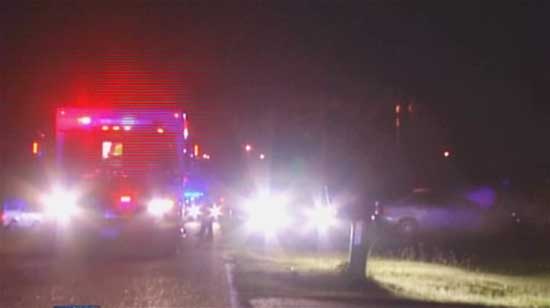 The shooting happened in the 900 block of Jacks Branch Road just south of River Annex Road about 4:20 a.m.
John Alex Godwin, 34, crashed is his car into the home of 25-year old Heather McKamey of Cantonment. The car literally pushed in the front door, door frame and surrounding bricks.
Godwin was shot by 25-year old Andrew Lundy of Cantonment, said Deputy Matt Baxter, spokesperson for the Escambia County Sheriff’s Office, adding that Lundy will not face charges.
Godwin, who reportedly suffered multiple gunshot woulds to the chest, was airlifted by LifeFlight to Sacred Heart Hospital in Pensacola where he remained in critical condition Friday afternoon. Baxter said Godwin is expected to survive his wounds.
Charges are pending against Godwin, according to the Sheriff’s Office.
Baxter described Godwin as McKamey’s ex-boyfriend.
A third person in the home, who has not been identified, had no part in the shooting, Baxter said. That person’s name has not been released.
Pictured: A man was shot early Friday morning after driving his car into this house in the 900 block of Jacks Branch Road in Cantonment. Deputies say the incident was a domestic violence incident. Photos by WEAR for NorthEscambia.com, click to enlarge.
Cancer Scam Woman Asks Judge To Let Her Out Of Jail
July 13, 2012

A Molino woman convicted of faking a cancer diagnosis has asked a judge to let her out of jail, but the judge said no.
In early May, Sonja Luker was sentenced by Judge Joel Boles to 364 days in jail to be followed by 18 months probation and 200 hours of community service.
 Luker’s letter to Judge Boles asked that he consider letting her out of the Escambia County Jail due to the conditions at the jail, the fact that restitution and court costs in the case were paid, and the fact that she had never been in trouble before, Assistant State Attorney Greg Marcille said. The letter also raised health issues, her trouble-free record behind bars and pointed out that she is an inmate worker.
Marcille said Luker also asked that Boels sentence her to community control, plus any additional probation that the judge might desire, when letting her out from behind bars.
Boles denied Luker’s request on the same date it was filed.
Back in March, Sonja Luker pleaded no contest to a felony fraud charge; a previous grand theft charge against her was dropped in May 2011. Charges were dropped against her husband, Gerald “Chris” Luker after he made restitution to each identifiable victim and made a donation to the American Cancer Society.
According to the Escambia County Sheriff’s Office, numerous fundraisers were held between May 2004 and October 2010 that raised over $19,000. Sheriff’s investigators found that about $14,000 was used in 2009 to avoid foreclosure on their home in the 4700 block of Pine Circle Drive and about $4,000 in cash was used by Chris Luker to purchase a 1997 Harley motorcycle, according to an arrest report.
Chris Luker provided the funds to make restitution to those that donated to the “Sonja Luker Kickin Cancer Fund” and checks were mailed to victims in February. Victims that made donations by check received the full amount of the original donation.
By tracing bank deposits, prosecutors found $8,506.81 in donations that were made in cash by unknown donors to Sonja Luker. Chris Luker agreed to make an equal donation of $8,506.81 to the American Cancer Society “with the intent of the original donors to support the cure for cancer”, according to a letter that known victims received from the State Attorney’s Office.
Under the plea agreement, Chris Luker will be unable to claim a tax deduction for his donation to the American Cancer Society. Clerk of the Court records do not indicate that Sonja Luker paid any restitution, just $518 in court costs.
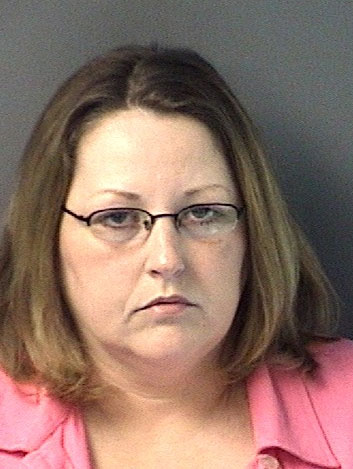
Pictured inset: Sonja Luker’s mugshot after she was booked into the Escambia County Jail in May. Pictured top: Sonja and Chris Luker (in black shirts) are seen in a 2009 NorthEscambia.com photo from a motorcycle ride fundraiser that benefited her alleged fight against cancer. NorthEscambia.com file photo, click to enlarge.
Driver Identified In Fiery Fourth Of July Traffic Crash
July 13, 2012
The driver killed in a fiery crash July 4 in Escambia County has been identified by the Medical Examiner’s Office.
Sean Matthew Kerr, age 27 of Pensacola, lost control for unknown reasons and slammed into a tree about 11:07 p.m. on Muldoon Road south of Cerny Road. The vehicle was fully involved in flames when first responders arrived on scene and was complete destroyed by the fire.
Kerr was pronounced deceased at the scene by a paramedic.
FDLE’s ‘Safe Summer’ Nets 23 Sex Offender Arrests, Five In Escambia County
July 13, 2012
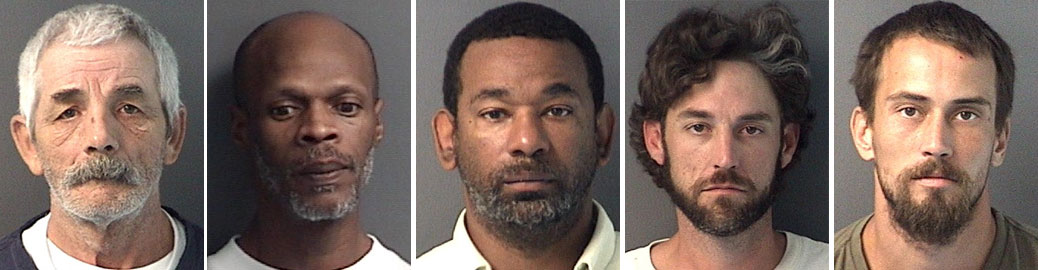
The Florida Department of Law Enforcement and local law enforcement agencies have arrested 23 sex offenders and predators statewide who failed to comply with Florida registration requirements as part of Operation Safe Summer. Five of those arrests were in Escambia County.
“We identified and targeted the most dangerous absconders. In most of the cases we were dealing with cold leads,” said FDLE Commissioner Gerald Bailey. “Working with our law enforcement partners, new leads were developed allowing us to locate and arrest these sex-offenders-in-hiding.”
Officers arrested five of 23 captured statewide in Escambia County:
- Timothy Melburn Perlberg, 63
- Willie L. Maxwell, 51
- Charvis Markeith Satterwhite, 41
- James Erik Cross, 32
- Christopher Thomas Dasinger, 29
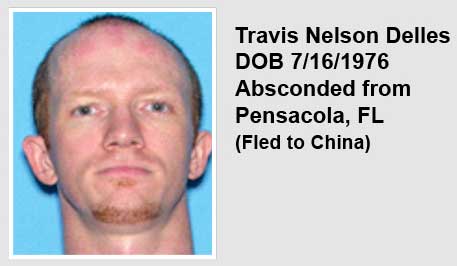 Of over three dozen individuals wanted across from the state, one is from Escambia County – Travis Nelson Delles, age 36. He is believed to have fled to China.
Investigators believe a total of 20 targeted absconders have fled the country. Their identities have been given to the US Marshals Service so they can be arrested immediately if they try to return.
“The Sheriffs of Florida and their thousands of dedicated staff have declared war on sex offenders and internet predators–if you hide from us, we will find you,” said Volusia County Sheriff Ben Johnson, president of the Florida Sheriffs Association. “We are dedicated to keeping the streets safe and ensuring citizens know when an offender lives among them.”
Operation Safe Summer coincided with the end of the school year, because FDLE said children are more likely to come in contact with sex offenders or predators during the summer months.
Click the graphic below to enlarge and see those wanted by FDLE.

Santa Rosa Gets TS Debby Assistance, Nothing For Escambia
July 13, 2012
Additional assistance to aid in recovery from the impacts of Tropical Storm Debby was approved Thursday for additional counties including Santa Rosa, but not Escambia.
Public assistance provides grant assistance for debris removal and emergency protective measures. Costs for repair, replacement, or restoration of disaster-damaged, publicly-owned facilities can also be covered under Public Assistance. To date, 29 counties have been approved for public assistance.
Assistance for individuals and families has been approved in 17 counties, not including Santa Rosa or Escambia.
Supreme Court Upholds Florida’s Drug Possession Law
July 13, 2012
Florida’s drug possession statute can force those who say they didn’t know they were breaking the law to prove that or be presumed guilty, the state Supreme Court said Thursday in one of the most closely watched Florida drug cases decided in recent years.
By a 5-2 ruling, the court upheld a 2002 Florida law that says defendants busted with drugs are presumed to have known they knew what they had was illegal, and if they claim they didn’t, requires them to prove that to jurors.
In not requiring “knowledge” of the illegality of whatever they were carrying, the law puts Florida at odds with at least 48 other states that require prosecutors to convince a jury that defendants knew they were carrying illegal drugs.
Under the Florida law upheld on Thursday, the state still must prove that defendants knew they were in possession of something – prosecutors just don’t have to prove the defendant knew that it was an illegal substance. For example, if drugs are found in the trunk of a car, the state would have to prove the defendant knew they were there. But if the defendant says he thought he was buying a bag of sugar, not drugs, he’d have to prove that to jurors, who, under the law, are allowed to presume he was carrying drugs.
The high court was asked to weigh in on the case after a state circuit judge in Manatee County last year threw out 46 drug possession cases, saying they conflicted with a recent federal court opinion that found the law unconstitutional. Lower federal court decisions, however, aren’t binding on state courts. The Manatee judge’s decision, which potentially invites the reversal of thousands of other drug possession cases, was appealed directly to the state Supreme Court.
Justice Charles Canady said lawmakers made their intent clear in passing the law.
“The conduct the Legislature seeks to curtail is the sale, manufacture, delivery, or possession of a controlled substance, regardless of the defendant‘s subjective intent,” Canady wrote in the majority opinion.
Critics of the law said it violates basic federal constitutional protections and the premise that defendants are innocent until proven guilty. They also argued the law wrongly assumes that wrongful imprisonment is unlikely.
“I cannot overstate my opposition to the majority‘s opinion,” said Justice James Perry in a dissent. “In my view, it shatters bedrock constitutional principles and builds on a foundation of flawed ?common sense.”
The state court ruling, however, conflicts with a federal court opinion rendered in July that found the state law problematic.
In that ruling throwing out another conviction, U.S. District Judge Mary Scriven found the state’s possession law unconstitutional, saying defendants must know a controlled substance is illicit to be convicted of a drug offense.
“Other states have rejected such a draconian and unreasonable construction of the law that would criminalize the ‘unknowing’ possession of a controlled substance,” Scriven wrote.
Scriven’s ruling in Mackle V. Shelton v. Secretary of Corrections brought a deluge of litigation, leading to the dismissal of charges in circuits across the state.
“(Scriven’s ruling) has produced a category-five hurricane in Florida criminal practice,” Miami-Dade Circuit Judge Milton Hirsh wrote in an opinion dismissing charges against 39 cases in Miami.
But a final word on which ruling stands would have to be made by the U.S. Supreme Court because federal District Court decisions are not binding on the state Supreme Court.
Derek Byrd, president of the Florida Association of Criminal Defense Lawyers, said he expects at least one of the cases to be appealed.
“It’s disappointing,” Byrd said of the Florida court ruling.”The bedrock of criminal law has always been that there must be criminal intent.”
By The News Service of Florida
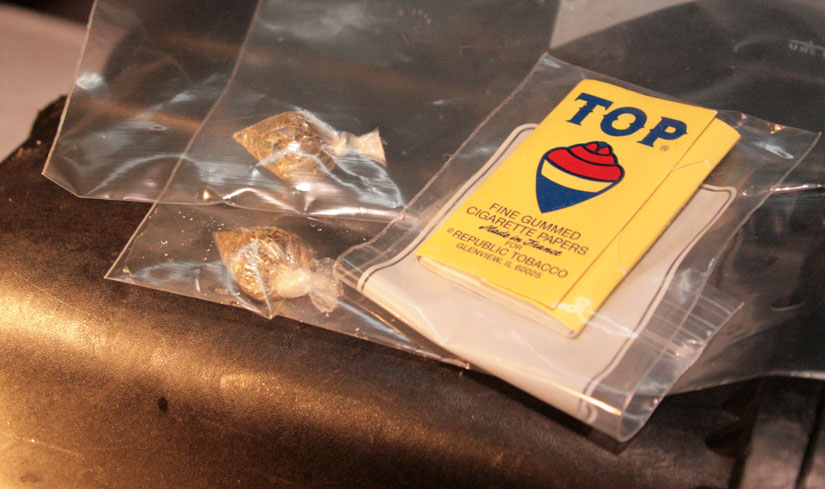
Pictured top: Marijuana and rolling papers seized during a drug search in Century. NorthEscambia.com photo, click to enlarge.
Wahoos, Chattanooga Rained Out
July 13, 2012
Heavy rain Thursday in southeastern Tennessee forced the game between the Blue Wahoos and Chattanooga Lookouts to be postponed until Friday. The two teams will wrap up the three-game set with a doubleheader beginning at 5:15 EDT at AT&T Field in Chattanooga. Both games will be seven inning contests.
The Blue Wahoos will send left-hander Tony Cingrani to the mound in game one with right-hander Mark Serrano getting the nod in game two. The starters for Chattanooga have not yet been announced.
Following the twin-bill, the Blue Wahoos will hit the pavement back to Pensacola to open a four-game set with the Jacksonville Suns on Saturday night at 6:30 p.m.
Law Would Boost Medicaid Payments To Florida Doctors
July 13, 2012
In a move aimed at getting doctors to treat more low-income patients, the federal health overhaul likely will lead to increased Medicaid payments to Florida primary-care physicians.
The federal Affordable Care Act, which was largely upheld last month by the U.S. Supreme Court, requires higher Medicaid payments to primary-care physicians in 2013 and 2014. Florida Republican lawmakers had not started moving forward with the higher payments because of their broader opposition to the act, which they deride as “Obamacare.”
Senate Health and Human Services Appropriations Chairman Joe Negron, R-Stuart, said Thursday he hopes Congress will ultimately repeal the act. But even if such a repeal happens, Negron said he supports the state increasing Medicaid payments to primary-care physicians
“It’s real simple,” Negron said. “If you pay people fairly for their work, they’re happy to take on more patients.”
The federal government would fully fund the increased payments in 2013 and 2014, though Florida would have to pick up a share of the additional costs in later years. The act would require Medicaid payments to primary-care physicians, such as family doctors and pediatricians, to mirror higher payment levels in the Medicare program.
In Florida, that could be a substantial boost for some types of doctors. As an example, Tallahassee physician Louis St. Petery, executive vice president of the Florida Pediatric Society, said pediatricians who treat Medicaid patients get paid an average of 56 percent of what Medicare would pay.
St. Petery and officials of other physician groups said the low Medicaid payment rates have deterred doctors from seeing Medicaid beneficiaries, which has created problems in patients having access to care. St. Petery said many doctors consider the higher Medicare payment levels as “the break-even rate.”
“For years, we have argued that Medicaid payment for physician services should be on par with Medicare payment,” Tim Stapleton, executive vice president of the Florida Medical Association, said in an e-mail. “The fact is that Florida physicians are paid very poorly under Medicaid. As a result, many physicians do not accept Medicaid, not because they don’t want to take care of these patients, but because they can’t afford to treat them.”
The U.S. Supreme Court’s landmark decision in late June upheld most of the Affordable Care Act, though it gave states an option about whether to go along with part of the law that would expand Medicaid eligibility to more low-income people. Gov. Rick Scott, an outspoken critic of the act, has said Florida will not expand Medicaid eligibility, at least in part because of the possibility of increased costs in the future.
But while the state appears unlikely to expand eligibility, it might have little choice about carrying out the physician-payment increases. In an e-mail to other members of the governor’s staff last week, Jane Johnson, a health-policy aide to Scott, indicated that the physician payment increases are not optional.
In response to a question Thursday about Scott’s stance on moving forward with the increases, spokesman Lane Wright said in an e-mail: “Governor Scott has stated he will comply with any part of the law that is required before January 1, but he hopes the law will be repealed before any of these other provisions go into effect.”
A Senate budget plan early this year included fine print that would have allowed the state to use $438.5 million in federal funds to increase primary-care physician payments in January 2013. But House leaders would not go along with the idea, because it was linked to the Affordable Care Act, which was under review at the Supreme Court.
With the issue being left out of the budget, it is somewhat unclear how the state could move forward with the increased physician rates in January. One possibility would be for the Legislative Budget Commission, a joint House and Senate panel that can make budget changes, to take up the issue.
The state’s costs of increasing physician payment rates also are unclear, though a January analysis indicated the cost during the 2014-15 fiscal year — the first year the state would have to pick up part of the tab — would be as much as $188.6 million.
Michelle Dahnke, a spokeswoman for the Florida Agency for Health Care Administration, said in an e-mail Thursday that the state is waiting for information from the federal government about the “impact” of the Supreme Court decision on various parts of the Affordable Care Act. She said the agency has not updated the cost estimates since January.
Regardless of the federal law, Negron said he thinks the state can find money to increase physician payments. He said, for example, that the state has increased payment levels for dentists who treat children enrolled in Medicaid. Also, a 2011 law aimed at transforming Medicaid into a statewide managed-care system includes a provision to spur higher physician payments.
“It’s about priorities,” Negron said. “And making sure our friends and neighbors on Medicaid can see a doctor is a top priority for me.”
By Jim Saunders
The News Service of Florida
Caregiver Support Meeting Scheduled
July 13, 2012
The Council on Aging of West Florida will host a Century Caregiver Support Group Meeting on Thursday, July 19 at 6 p.m.
There is no cost and the public is invited. Reservations are not required. The meeting will be held at Century Care Center located at 6020 Industrial Blvd. The group meets on the third Thursday of each month at the same time and location. County residency is not required to attend.
The support group is designed to reduce stress, increase coping skills, provide strategies for effective management of care giving tasks and enable caregivers to provide high quality care in the home. The programs are sponsored by Council on Aging of West Florida, the State of Florida Department of Elder Affairs and the Northwest Florida Area Agency on Aging. For more information, call (850) 432-1475.