

Man Tries To Run Over Two Officers; Shots Fired
September 10, 2015
Two Pensacola Police officers are on paid administrative leave after they fired their department issued guns at a man who tried to run them over with a vehicle Tuesday night.
The incident initially began around 7:50 p.m. Tuesday when officers were dispatched to a disturbance call in the 2100 block of West Belmont Street. A 30-year-old woman – Teresa Bailey – told police her former boyfriend – Deantawane Mitchell, 25, of Pensacola – was banging on her back door.
When officers arrived at the house, they learned Mitchell had left the area. Officer Mark Norman, who is familiar with Mitchell and knew he had an active warrant with the department for a criminal mischief incident that occurred in July, went to the Travel Inn, and found him sitting in the passenger seat of a car on the left side of the business.
 As Norman walked toward the car, he heard Mitchell begin yelling at the driver to leave.
When the driver refused, Mitchell shoved him out of the car and took control of the vehicle. Mitchell threw the vehicle into reverse and struck Norman’s marked police vehicle. He then did a three-point turn in the parking lot and accelerated at a high rate of speed toward Norman and Officer Sarah Barbosa.
Both officers yelled at Mitchell to stop or said they would shoot. Mitchell continued accelerating toward the officers, who each fired their weapon several times at the vehicle.
When Barbosa tried to get out of the path of the on-coming car, she fell backward and struck the back of her head on the concrete. As Mitchell was trying to leave the parking lot, he also struck a concrete wall.
Officer Charles Restifo later saw Mitchell and the car near the intersection of A and Lee streets. Mitchell then began trying to escape from Restifo by jumping a fence and running behind a house in the 500 block of West Lee Street where he was taken into custody.
Warrants have been signed charging Mitchell with two counts of assault on a law enforcement officer, and one count each of carjacking, resisting arrest without violence, leaving the scene of a traffic accident, fleeing/eluding police, and not having a driver’s license.
Mitchell was shot one time in the hand and received two additional superficial injuries consistent with a bullet wound. He was taken to a local hospital for treatment of non-life threatening injuries. Barbosa also was taken to a local hospital where she was treated and released.
The Florida Department of Law Enforcement is conducting a review of the incident in conjunction with the Pensacola Police Department.
United Way To Hold Campaign Kickoff Circus Event
September 10, 2015
United Way of Escambia County invites the community to join them for the annual campaign kickoff.
The free luncheon will feature many of United Way’s 30 funded nonprofit agency partners that benefit from the workplace fundraising campaigns. It will give attendees a more personalized opportunity to learn how their donated dollars impact local lives, according to a press release. The circus-themed event will take place on Thursday, September 17 from 11 a.m. to 1 p.m. at the Pensacola Bay Center.
 The three rings of United Way’s kickoff circus celebration reflect core focus areas that are the building blocks for successful communities—health, education and financial stability. Under the big top, an agency fair will give attendees the opportunity to learn more about how their donations improve lives in Escambia County.
Some partner agencies attending include Big Brothers Big Sisters of Northwest Florida, Early Learning Coalition, Manna Food Pantries and Legal Services of North Florida. United Way will announce our community’s workplace campaign goal for the year and will recognize the Pacesetter campaign totals. United Way said these campaigns represent those that have “set the pace” and built momentum for the campaign year.
If you are interested in how you can combine your giving and community impact with 8,000 other generous donors from 250 workplaces, join United Way for a free lunch. Last year, United Way campaign partners raised over $2.15 million for our community.
“Each year, United Way of Escambia County puts together a kickoff event that both informs the community about the annual workplace campaign and engages everyone in a fun-filled environment,” said United Way Campaign Chair Oliver Sumlin. “This year will be no different. You don’t want to miss out when we bring our own circus to town on September 17.”
For more information or to RSVP for a table of eight people, email info@unitedwayescambia.org or call (850) 434-3157.
Walnut Hill Man Charged With Violent Attack On Ex-Girlfriend
September 10, 2015
A Walnut Hill man is behind bars, charged with breaking into his ex-girlfriend’s apartment on Truman Avenue and violently attacking her.
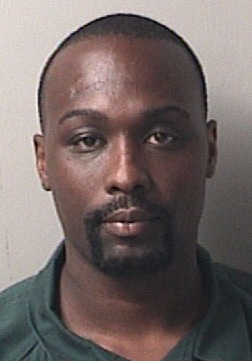 The victim told deputies that she and 29-year old Spencer Jamil Syria had been separated about three weeks, but he returned to her apartment and broke in. He then allegedly struck her multiple times in the face, kicked her, and placed his hand around her throat to prevent her from calling for help. He then, according to an arrest report, sexually assaulted the victim before fleeing her her SUV.
Syria was charged with burglary with battery, battery, battery by strangulation, sexual assault and obstructing justice. He remained in the Escambia County Jail with bond set at $250,000.
Update: FSU Changes Gun Information In ‘Game Day’ Guide
September 9, 2015
A day after getting hit with a lawsuit by a gun-rights group, Florida State University on Wednesday updated information in a football “game day” guide about fans keeping firearms in their vehicles.
But the changes to the school’s “Game Day Plan 2015″ guide for fans won’t holster the legal challenge by Florida Carry Inc. Sean Caranna, Florida Carry executive director, said the group will continue seeking an injunction against university President John Thrasher and university Police Chief David Perry.
 Meanwhile, another high-profile issue about guns on campus will heat up again next week when House and Senate panels consider controversial proposals (HB 4001 and SB 68) that would allow people with concealed-weapons licenses to carry firearms at colleges and universities. The idea stalled during this spring’s legislative session, but gun-rights supporters are bringing it back for the 2016 session.
The Florida Carry lawsuit stems, in part, from a 2013 ruling by the 1st District Court of Appeal that said the University of North Florida could not prevent firearms from being stowed in cars on campus.
The original version of FSU’s “game day” guide said weapons are prohibited on campus and that a “fan may not store firearms or other weapons in their vehicles parked on campus while attending the game.”
In updating the guide Wednesday, the university removed references to weapons from a section regarding parking. In another area of the guide, the school noted that while weapons and firearms are permitted in vehicles on campus, the items must be “securely encased in the vehicle.”
Caranna, who hopes to get a judge to rule before Saturday’s FSU home game against the University of South Florida, said only handguns must “meet the definition of being securely encased.”
“The new policy and the statements in their press release are insufficient and factually wrong,” Caranna said. “They could have saved us all a lot of trouble by giving us a call asking us and our attorneys to help them update the policy and come in compliance.”
Florida Carry and FSU graduate student Bekah Hargrove, a member of Florida Students for Concealed Carry, argue in the lawsuit that the “game day” guide fails to follow the 2013 ruling by the 1st District Court of Appeal.
The guide provides general information on parking, traffic patterns, tailgating, concessions, and other items such as banners, drones and smoking.
On Wednesday, the university acknowledged in a release that the guide hadn’t been updated to reflect the 2013 ruling. The school also pointed out in the release that while the out-of-date web site language existed, nobody had been cited for having firearms or weapons legally secured in vehicles.
Thrasher, a former powerful lawmaker, has been a key opponent of the legislative proposals that would allow people with concealed-weapons licenses to carry guns on college campuses. The renewed proposals are scheduled to be heard next Wednesday in the Senate Criminal Justice Committee and the House Criminal Justice Subcommittee.
In a prepared statement Wednesday related to the Florida Carry lawsuit, Thrasher indicated he hasn’t changed his mind about those legislative proposals.
“While we fully intend to continue complying with Florida law, I nevertheless reiterate my strenuous opposition to the recent initiatives to permit the carrying of guns on university campuses,” Thrasher said. “I do not believe that arming students increases campus safety.”
by Jim Turner, The News Service of Florida
Woman Crashes Into Wooded Area
September 9, 2015
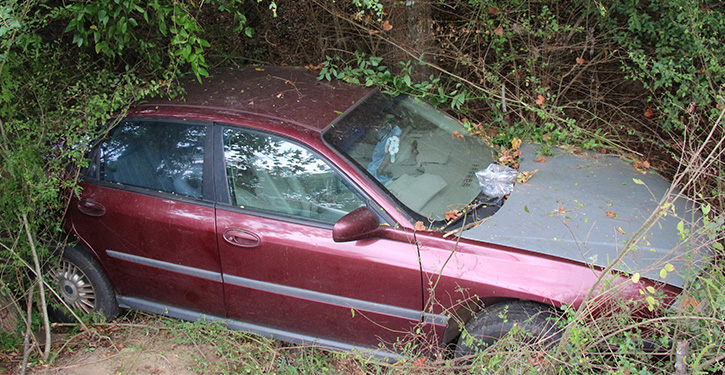
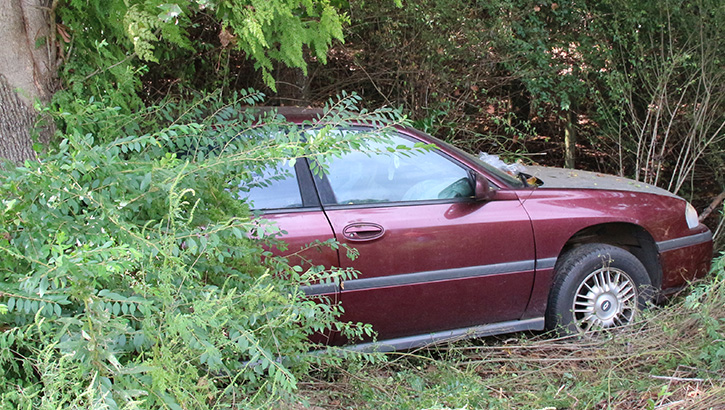
A woman escaped serious injury in a single vehicle crash near Walnut Hill Wednesday afternoon.
The 67-year old female lost control, ran off Meadows Road and traveled through a wooded area parallel the roadway about 2:45 p.m. The vehicle came to rest in a wooded area just off the road. The driver was transported by Atmore Ambulance to Atmore Community Hospital.
The Walnut Hill Station of Escambia Fire Rescue and the Atmore Fire Department also responded to the crash.
NorthEscambia.com photos, click to enlarge.
Motorcyclist Airlifted After North Century Boulevard Crash
September 9, 2015
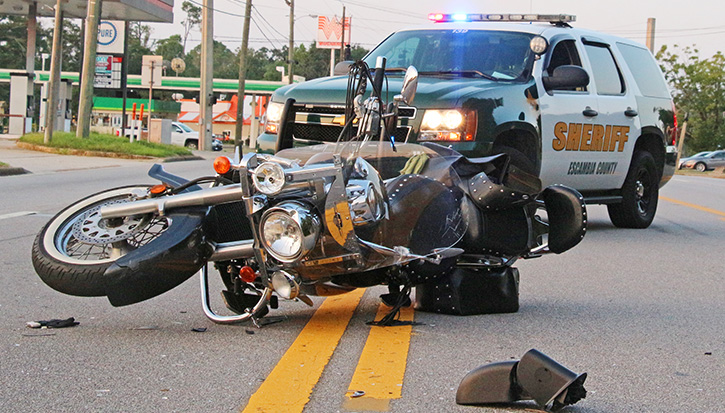
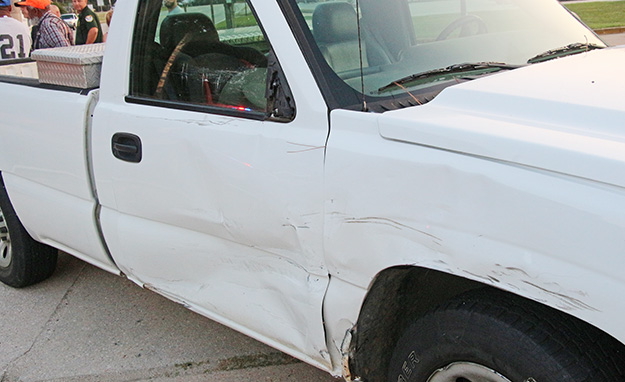
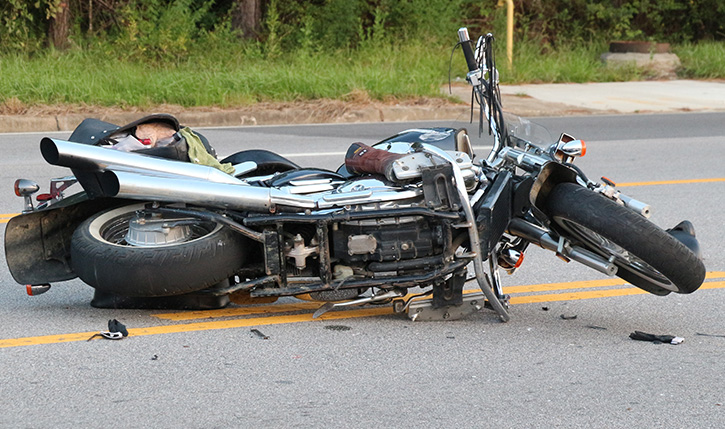
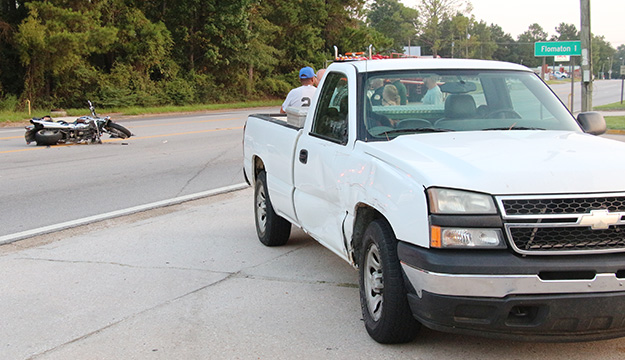
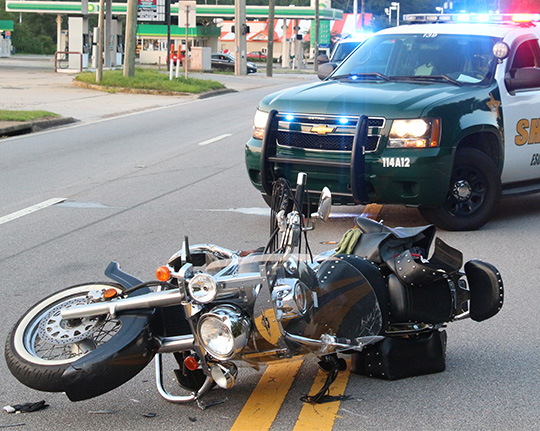
A motorcyclist was seriously injured in a crash with a pickup truck Wednesday morning in Century.
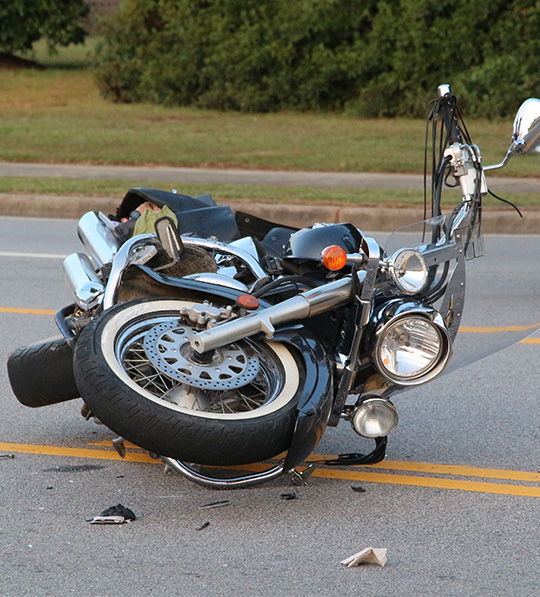
The accident happened just after 6 a.m. on North Century Boulevard in front of the Panhandle Restaurant. The male motorcyclist was airlifted by LifeFlight to a Pensacola hospital as a trauma alert following the crash. The driver of the pickp truck was not injured.
Further details, including the names of those involved, has not yet been released as the Florida Highway Patrol continues their investigation.
Escambia County EMS, the Century Station of Escambia Fire Rescue and the Escambia County Sheriff’s Office also responded to the accident.
NorthEscambia.com photos, click to enlarge.
Cantonment Man Charged With Ongoing Abuse Of Teen
September 9, 2015
A Cantonment man has been charged after the alleged ongoing abuse of a developmentally delayed teen.
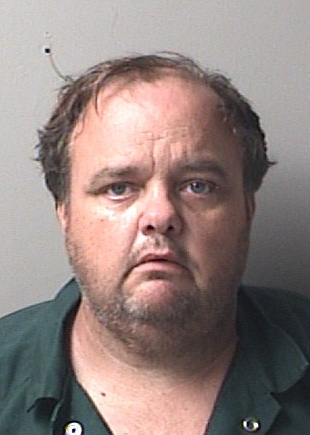 According to a Department of Children and Families investigation, Timothy Joe Dease, 40, was using Facebook to make sexual advanced to the victim, an underage female described as being developmentally delayed with several medical problems, and he had previously touched the victim in an inappropriate manner last Christmas.
Further investigation revealed that Dease began abusing the teen when she was 13, with a pattern of sexual abuse continuing for years, through age 16.
Dease was charged with multiple counts of lewd and lascivious behavior on a victim age 12 to 16. He remains in the Escambia County Jail with bond set at $100,000.
Children’s Council Awarded $125K White House Grant
September 9, 2015
The Escambia County (AL) Children’s Policy Council has been awarded a $125,000 Drug-Free Communities Support Program grant by the White House Office of National Drug Control Policy.
The coalition serves Escambia County, AL. The goal of the coalition is to establish and strengthen community collaboration in support of local efforts to prevent youth substance coalition will achieve its goal by implementing strategies that include education, skills enhancement and support.
The grant was awarded in cooperation with the Substance Abuse and Mental Health Services Administration
Local Students Named National Merit Scholarship Program Semifinalists
September 9, 2015
Eight local high school students have been named semifinalists in the 61st annual National Merit Scholarship Program.
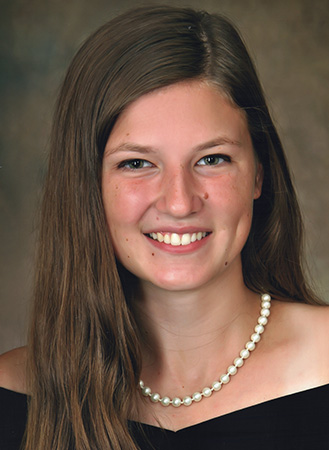 The students are Jessica K. Amerson of Northview High School; Richard W. Fell of Pensacola Catholic; Anish A. Gupta, Scott A. McGaugh and Colin T. O’Brien of Pensacola High; Colby C. Gilley of Trinitas Christian; Lauren Claire Giffin of Washington High School; and Alexa R. Graham, homeschool.
About 16,000 national semifinalists were announced Tuesday. These academically talented high school seniors have an opportunity to continue in the competition for some 7,600 National Merit Scholarships worth more than $32 million that will be offered next spring. To be considered for a Merit Scholarship award, semifinalists must fulfill several requirements to advance to the finalist level of the competition. About 90 percent of the semifinalists are expected to attain finalist standing, and more than half of the finalists will win a National Merit Scholarship, earning the Merit Scholar title.
To become a finalist, the semifinalist and their high school must submit a detailed scholarship application, in which they provide information about the semifinalist’s academic record, participation in school and community activities, demonstrated leadership abilities, employment, and honors and awards received. A semifinalist must have an outstanding academic record through-out high school, be endorsed and recommended by a high school official, write an essay, and earn SAT scores that confirm the student’s earlier performance on the qualifying test.
Pictured: Jessica Amerson, Northview High School.
Escambia Jail Releases The Wrong Inmate
September 9, 2015
Escambia County corrections officers mistakenly released the wrong man from jail Monday, and so far authorities have not found him.
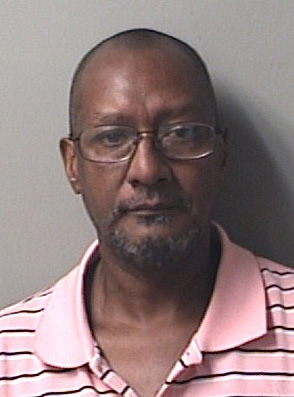 Correction officers meant to release Steve Watson on bond, but they retrieved the wrong inmate and mistakenly released Peter Watson instead. Peter Watson was being held on $2,500 bond on a shoplifting charge.
Shortly after the release, corrections officers realized their mistake and unsuccessfully searched the immediate area surrounding the jail, according to a county news release.
The Escambia County Sheriff’s Office has been notified of the mistake, and jail administration is investigating the incident.